About the Course
Why Utilities Are Moving to the Cloud
For years, power, gas and water companies ran billing on large in-house systems that read meters once a month. That world is changing. Smart meters send readings every few minutes. Rooftop solar means some customers sell power back. Regulators ask for faster, clearer reports. Older systems struggle to keep up.
Cloud systems, now part of most utilities certification and training plans, help by scaling with data, connecting easily to meters and apps, and receiving updates without big upgrade projects. SAP Cloud for Utilities training explains how the classic utilities processes work in this new setup and what a consultant must do differently.
The Project: A Power Distributor's Meter-to-Cash
A power distribution company in Pune serves homes, shops and small factories, and is replacing old meters with smart ones. In SAP Cloud for Utilities training you build its meter-to-cash flow. You create a business partner, contract account and premise for a new shop owner who moves in. You set up a normal tariff and a time-of-use rate that charges more in evening peak hours. Smart meter readings arrive through Integration Suite, and a power cut alert flows in through Event Mesh. You run a billing simulation, then the real bill, post it to contract accounting and send a reminder when payment is late. Finally, you build a dashboard showing billing accuracy and unpaid amounts by area.
Meter-to-Cash in Six Steps
| Step | What Happens |
|---|
| 1. Customer | Business partner, contract account and premise are set up |
| 2. Meter | The device is installed and linked to the premise |
| 3. Reading | Readings arrive from the meter or a field visit |
| 4. Billing | Usage is priced with the right tariff |
| 5. Invoice | The bill is printed or sent digitally |
| 6. Payment | Payments, reminders and, if needed, disconnection |
What SAP Cloud for Utilities Training Covers
Customers and Contracts
SAP Cloud for Utilities training starts with the data every bill depends on: business partners, contract accounts, premises, installations and points of delivery, plus move-in, move-out and service orders. These basics appear in every utilities certification syllabus.
Tariffs, Bills and Payments
Next you build rate structures, consumption-based and time-of-use pricing, and run billing simulations to catch mistakes before customers do, a key utilities certification skill. You then follow the bill into contract accounting, payments, dunning and disconnection.
Integration, Data and Operations
The final part of SAP Cloud for Utilities training covers links to S/4HANA, meter data flows, Integration Suite, Event Mesh and APIs, analytics and regulatory reports, data privacy and access control, and how cloud systems are monitored and kept running.
SAP Cloud for Utilities Training Plan, Week by Week
| Week | Focus |
|---|
| 1 | Industry changes, cloud architecture, IS-U to cloud |
| 2 | Meter-to-cash and customer data |
| 3 | Contracts, premises, move-in and service orders |
| 4 | Tariffs, time-of-use and billing simulation |
| 5 | S/4HANA, FI-CA and meter data links |
| 6 | BTP, Integration Suite, Event Mesh and APIs |
| 7 | Analytics, reports, security and operations |
| 8 | Power distributor project and interviews |
How This Course Fits With Module Courses
SAP Cloud for Utilities training gives the big picture of utilities on cloud. Some roles need one area in much more depth. Customer service teams can go further with the ISU CCS course. Finance and collections staff can go further with the ISU FICA course.
If your work is mainly smart meter data and time series, the ISU EDM course covers energy data management in detail.
Is This Online Course Right for You?
SAP Cloud for Utilities training suits IS-U consultants moving to cloud projects, utilities staff from billing or customer service, and integration developers new to the energy sector. Beginners can join if they understand how a household electricity or gas bill works. No coding is needed. Each class is live with a trainer and recorded.
Before choosing between job-oriented courses or a utilities certification course, ask whether you will build a full meter-to-cash flow or only watch demos. SAP Cloud for Utilities training is built around a working flow, and the course fees are listed below with EMI.
SAP Cloud for Utilities Training and Utilities Certification
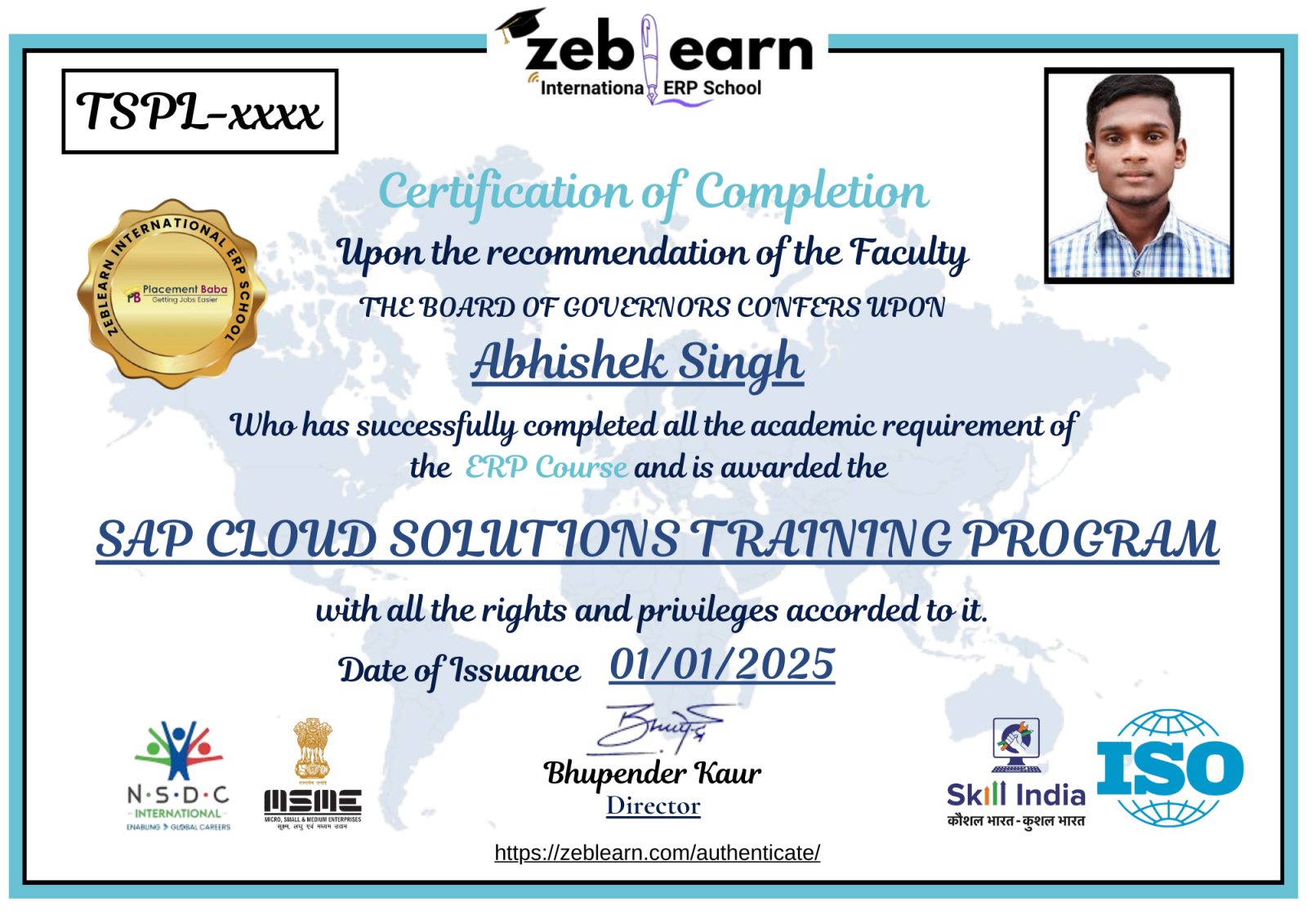
We could not confirm a current official utilities certification exam. Some websites still promise one; please check before paying. You receive a Zeblearn course certificate when you finish SAP Cloud for Utilities training.
If you want an official utilities certification badge for the technical side, the integration exam is a useful option. The certification tab explains each utilities certification route plainly.
Read the Bill First
Every new topic starts with a real electricity bill. You find the line on the bill that the topic affects, then build it in the system. This keeps SAP Cloud for Utilities training grounded and gives you simple answers for interviews and utilities certification questions.
Who Should Take SAP Cloud for Utilities Training?
SAP Cloud for Utilities training suits:
- IS-U consultants moving to cloud projects
- Billing and customer service staff at power, gas or water companies, new to utilities certification
- Integration developers joining energy projects
- Engineering and commerce graduates seeking an energy sector career
- Consultants weighing utilities certification who want a full project first
Course Details and Fees
| Item | Detail |
|---|
| Duration | 8 weeks, 2-hour live classes |
| Modules | 9 |
| Batches | Weekday or weekend |
| Format | Online, trainer-led, recorded |
| Course fee | ₹75,000, EMI available |
| Certificate | Zeblearn certificate, plus exam guidance |
Joining a utilities cloud project? Speak with the Zeblearn team about SAP Cloud for Utilities training and utilities certification.