








































HR Generalist Master Training for Core People Operations

HR Generalist Master Training examines the day-to-day responsibilities that keep people operations organised and compliant. It addresses recruitment coordination, onboarding, employee records, attendance and leave processes, payroll inputs, workplace policies, performance support, and employee relations. The course also develops the communication, documentation, problem-solving, and stakeholder-management abilities needed to contribute effectively across HR functions and progress towards leadership roles.
4.9 out of 5 based on 11372 votes
google

4.8/5

sulekha

4.8/5

urbanpro

4.7/5

justdial

4.9/5

facebook

4.9/5


ISO
NSDC
Ministry of Corporate Affairs India
Skill India

Calculate Your Course Fee


By requesting here, I agree to Zeblearn's Terms & Conditions and Privacy Policy

Our Partners

Zeblearn Certification Partners

HR Generalist Master Training partners with top HR tech providers to ensure curriculum relevance. Participants receive access to premium tools such as SAP SuccessFactors and Workday.

project-management-institute
adobe
autodesk
meta
cisco
microsoft-certified-professional
information-technology-specialist
unity
intuit
apple
esrp
ic3-digital-literacy-certification
project-management-institute
adobe
autodesk
meta
cisco
microsoft-certified-professional
information-technology-specialist
unity
intuit
apple
esrp
ic3-digital-literacy-certification
Our Students Now Work At Top MNCs
8500+ Students Placed
Nishant Kaushik Placed
Nishant Kaushik
SAP MM
manideepak Upskilled
manideepak
Manager
Hari Shankar Jha Career switch
Hari Shankar Jha
Senior System Admin
alok kumar singh Upskilled
alok kumar singh
sap hcm
Jeevak Placed
Jeevak
Consultant
Abhijit S. Getme Upskilled
Abhijit S. Getme
Consultant Engineer
Kartik Singh Placed
Kartik Singh
SAP SD
Hemant Khainar Upskilled
Hemant Khainar
SAP MM Consultant
Neeraj Khanna Placed
Neeraj Khanna
SAP MM
Burna Vinay Kumar Placed
Burna Vinay Kumar
SAP SD Consultant
Shubham Placed
Shubham
SAP ABAP Consultant
Shashikant Career switch
Shashikant
Structure Engineer
Khushbu Career switch
Khushbu
Sap hcm
Nishant Kaushik Placed
Nishant Kaushik
SAP MM
manideepak Upskilled
manideepak
Manager
Hari Shankar Jha Career switch
Hari Shankar Jha
Senior System Admin
alok kumar singh Upskilled
alok kumar singh
sap hcm
Jeevak Placed
Jeevak
Consultant
Abhijit S. Getme Upskilled
Abhijit S. Getme
Consultant Engineer
Kartik Singh Placed
Kartik Singh
SAP SD
Hemant Khainar Upskilled
Hemant Khainar
SAP MM Consultant
Neeraj Khanna Placed
Neeraj Khanna
SAP MM
Burna Vinay Kumar Placed
Burna Vinay Kumar
SAP SD Consultant
Shubham Placed
Shubham
SAP ABAP Consultant
Shashikant Career switch
Shashikant
Structure Engineer
Khushbu Career switch
Khushbu
Sap hcm
Curriculum

HR Generalist, Master Training, ZeblearnIndia, HR, leadership roles Course Syllabus Structure

The HR Generalist Master Training curriculum blends talent acquisition, compensation design, and compliance management. Learners practice drafting job descriptions, calculating salary bands, and conducting audit simulations.

• Employees’ Provident Fund (EPF) 
• Payment of Bonus 
• Employees’ State Insurance (ESI) 
• Payment of Gratuity

• Payroll Processing 
• Tax Planning for Salaried Employees 
• Mathematical Functions 
• Date and Time Function 
• Text Functions and Data Validation 
• Logical Functions 
• Lookup and Reference Functions 
• Data Collection Method

• DISCIPLINARY ACTION/TERMINATION/MISCONDUCT 
• CONTRACT LABOUR (REGULATION AND ABOLITION) ACT 1970 
• SHWW Act, 2013 (New Topic Added) 
• SHOPS and ESTABLISHMENT Act 
• FACTORY Act, 1948 
• BOWC (Building and Other Constructions Workers) Act, 1996 
• TRADE UNION 
• INDUSTRIAL DISPUTES Act, 1947 (New Topic Added) 
• MINIMUM WAGES Act 
• APPRENTICESHIP Act, 1961 (New Topic Added)

 Design a PMS System 
• Goal Cascading 
• Mapping the KRAs and KPIs 
• Link Reward System to Achievement of KRAs 
• Performance Counseling Techniques 
• Reward and Recognition System. 
• Performance Report and Dashboard

• Build Core and Functional Competency Frameworks 
• Learning Need Analysis/ Module Design/ Budgeting / Calendar 
• Assessment Processes and Feedback Analysis 
• ROI Measurement 
• Organizational Diagnosis/Assessment

• Why Policies, Steps to Frame HR Policy? 
• HR Policy Framework/Checklist 
• Attendance Policy 
• Leave policy 
• LTA and Reimbursement Policy 
• Code of Ethics and Business Conduct 
• Email, Internet, and Computer Use Policy 
• Confidentiality and Non-Disclosure Policy 
• Effective Retention Policies

• Contributions of HR from a Business Perspective 
• Review and Analyze Business Unit Data 
• Employee Budgeting and Manpower Planning 
• Workforce Planning, Succession Planning, Career
• Architecture Program and Skills Assessment 
• Attrition Issues and Control

• Joining Formalities and Relieving Procedure 
• Exit Interviews 
• Employee Engagement 
• Communication Downward, Upward, Horizontal 
• Gamification and Modern age engagement activity 
• Be open to coach and mentor 
• Open to new Idea and Initiative 
• Human Resource Round Table 
• Practical Role Play for Employee Relationship Building 
• Grievances

• End-to-End Recruitment Process 
• Job Analysis, Job Advertisement 
• Industry Mapping 
• Head Hunting and Blind Recruitment 
• Profile Sourcing – Hands-on Experience on Job Portals i.e., Naukri | Monster | Timesjob | LinkedIn 
• Sourcing Methodologies – Boolean Search, Keyword Search 
• Screening, Short-Listing of Resume.

• Overview of Payroll Management 
• Labour Law Statutory Compliances & Computation 
• Tax Saving Investment Deductions and Exemptions 
• Payroll Processing and Reports

• Minimum Wage and Overtime Rules 
• Federal Income Tax Withholding 
• Employment Eligibility 
• Taxable and Non-Taxable Compensation 
• Wage and Tax Reporting

• HR management system. 
• Best practices to comprehend human resource practices 
• Human Resource Planning 
• National Insurance 
• Legal Obligations

• Data & Analytics 
• The framework of HR analytics
Beyond Learning

We empower you with skills that land your dream job.

By requesting here, I agree to Zeblearn's Terms & Conditions and Privacy Policy

FREE
HR GENERALIST MASTER TRAINING
SELF ASSESSMENT

Assessment in HR Generalist Master Training combines scenario‑based quizzes and a capstone HR audit project. Scores above 80% unlock a badge for advanced employee relations proficiency.

Take Free Practice Test
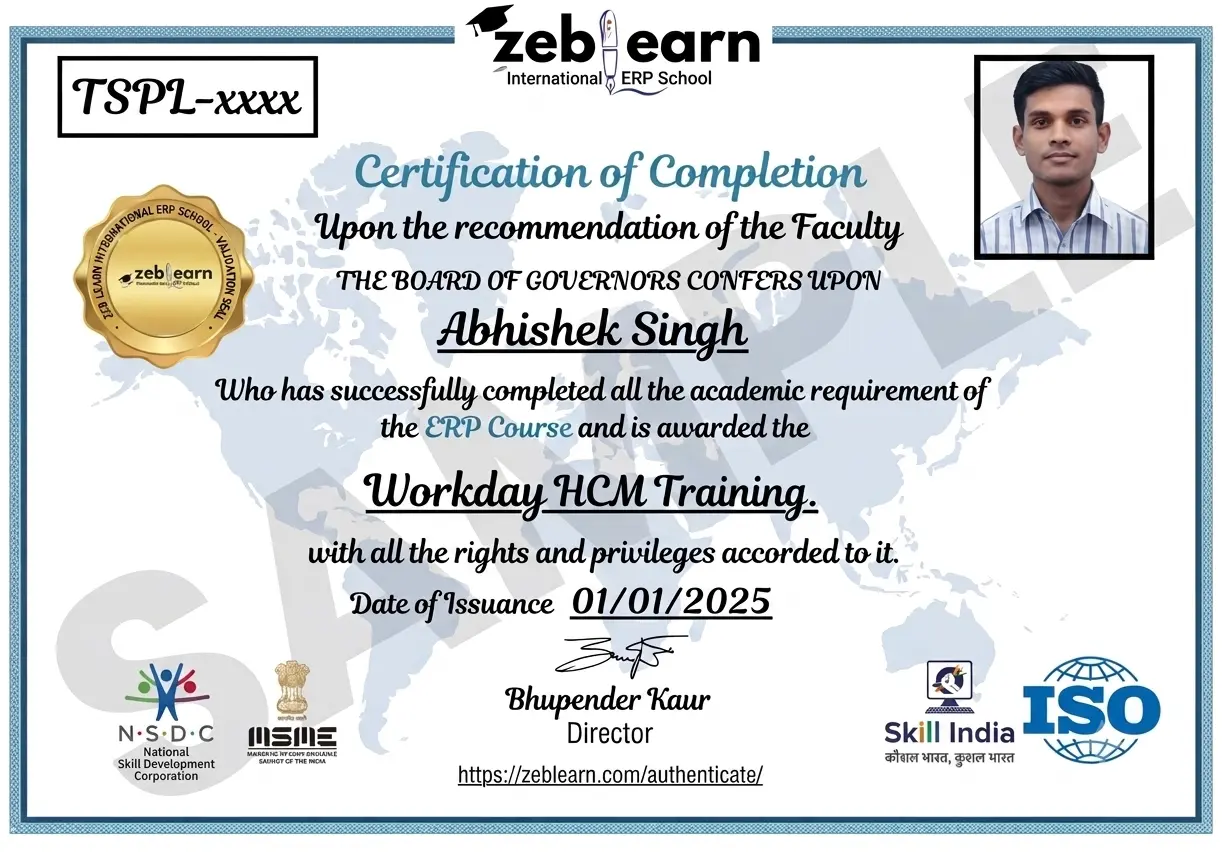
Workday Certificate
CAP Certified Learners

Hear From Our Certified Learners

Watch how CAP helped students crack exams and land global jobs.

Video Stories

Feedback from Our Students

Watch how Zeblearn's programs helped students achieve their professional goals.

Why Zeblearn

What You Get at Zeblearn

Zeblearn is a premier institute offering training in SAP, Workday, Data Science, Full-Stack Development, Salesforce, Machine Learning, Software Testing and more — available both online and in classroom, for students, working professionals and entrepreneurs.

  • Expert-Led Training
  • Globally Recognized Certifications
  • 100% Job Placement Support
  • Hands-On Learning
  • Flexible Learning Options
  • Affordable Course Fees
  • Career Growth Opportunities
View Courses
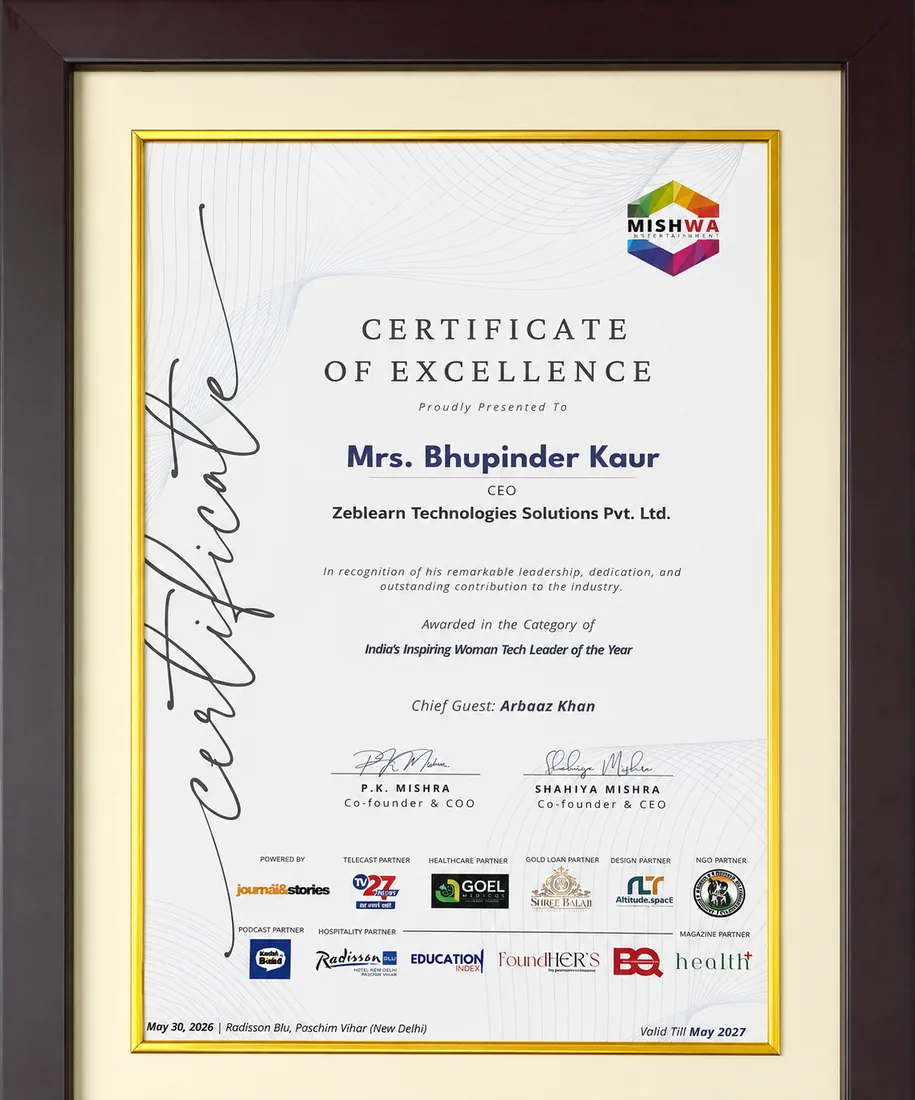
Awards & Recognition
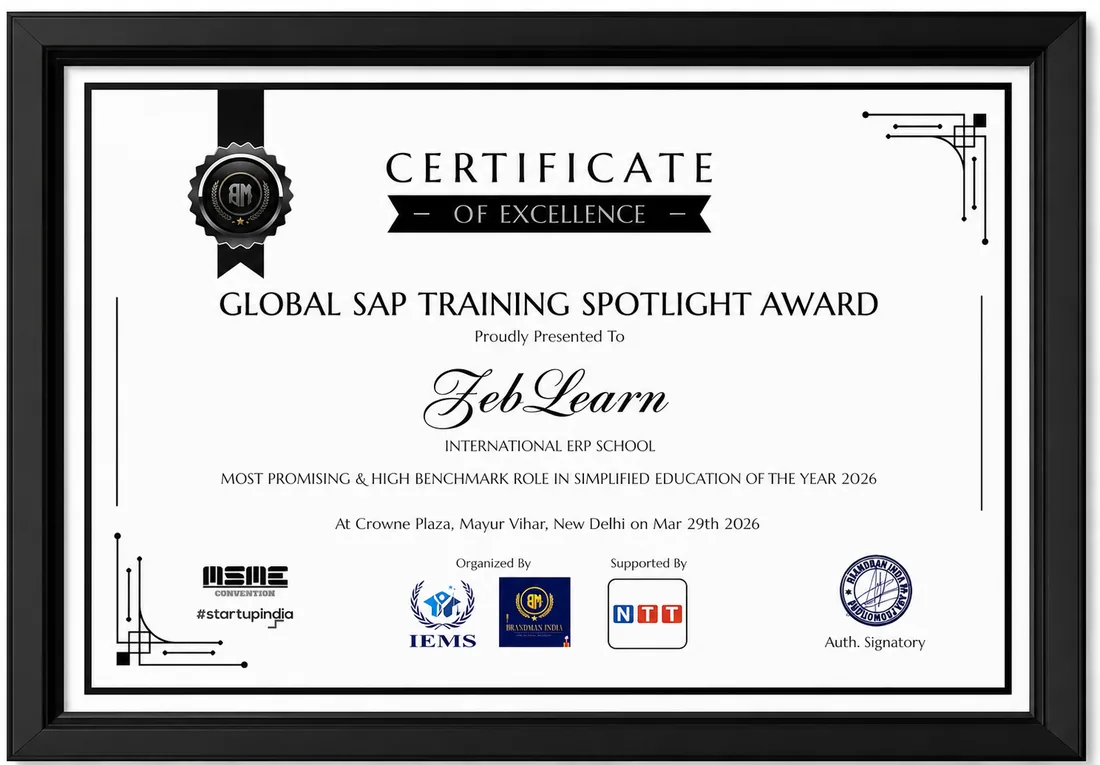
Global SAP Training Spotlight Award
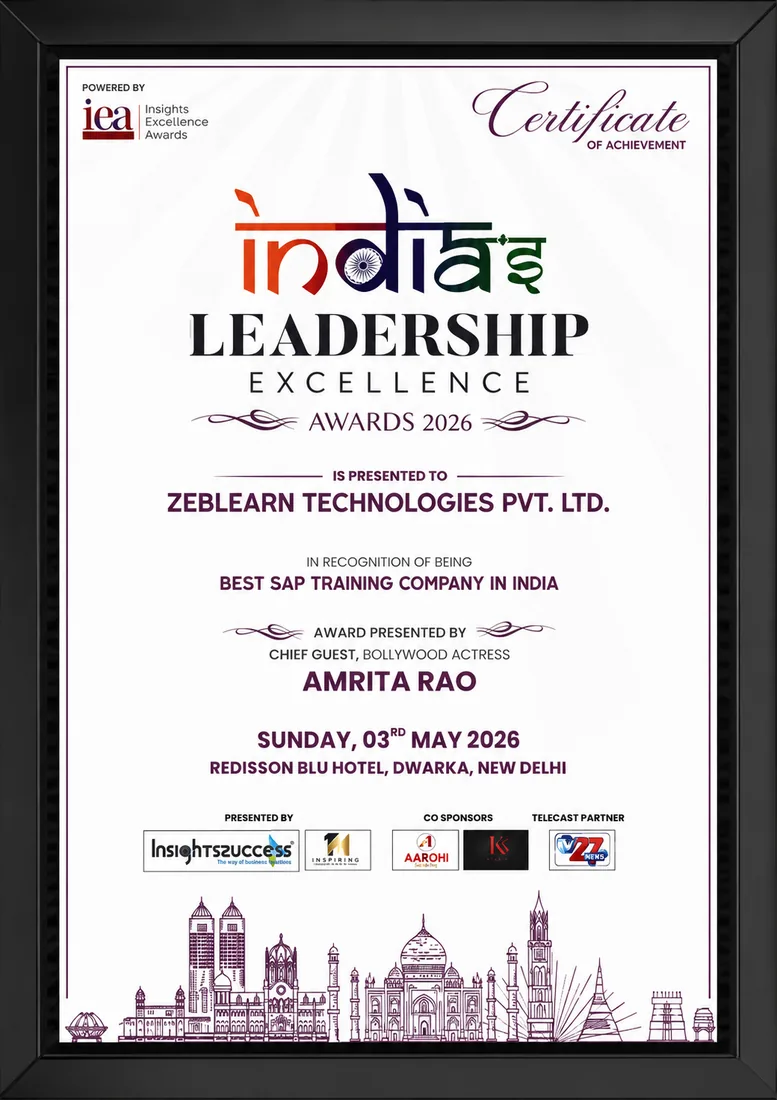
India's Leadership Excellence Award 2026
Inspiring Woman Tech Leader of the Year

Global SAP Training Spotlight Award

Brandman India · 2026

Certificate
After You Complete

Get exclusive access to career resources upon completion

Enroll in HR Generalist Master Training to receive exclusive access to ZeblearnIndia’s HR analytics sandbox. The sandbox contains anonymized data sets for predictive turnover modeling.

Evaluation & Practice Sessions

Participate in expert-led mock interviews and skill evaluation sessions after program completion.

Learning Simulation (LMS)

Lifetime access to LMS with recorded sessions, hands-on practice, and updated learning resources.

Career & Placement Assistance

Resume building, profile optimization, interview preparation, and placement guidance from industry experts.

Live Sessions

60-Minute Free Webinar with Certificate

Join our live sessions and earn a free certificate. Limited seats available!

Upcoming Live Classes

Sessions from

Live & Open
DateTime ISTCourse / ModuleRegister
Loading upcoming sessions...
Enroll Today

HR Generalist Master Training for Core People Operations — Flexible Batches For You

StatusDateTypeScheduleTime
SOLD OUT 31 Aug 2026 Weekend SAT - SUN (08 Weeks) 18:00 - 20:00
FILLING FAST 5 Sep 2026 Weekday MON - FRI (08 Weeks) 08:00 - 10:00
AVAILABLE 10 Sep 2026 Weekend SAT - SUN (08 Weeks) 10:00 - 12:00
Limited Time Offer

₹120,000

50,000

You save ₹70,000 Enroll Now, Pay Later

EMI options available · No-cost study now, pay later

FAQ

Frequently Asked Questions

Find answers to common questions about our HR Generalist, Master Training, ZeblearnIndia, HR, leadership roles, certifications, and courses.

HR Generalist Master Training is a comprehensive HR training program designed to teach the practical and professional skills required to manage major human resource functions. An HR Generalist Course typically covers recruitment and selection, employee onboarding, HR policies and procedures, attendance and leave management, payroll coordination, employee relations, performance management, employee engagement, training and development, HR documentation, HR compliance, and employee separation. Unlike a course that focuses on only one HR specialization, HR Generalist Training provides a broad understanding of the complete employee lifecycle. An HR Generalist needs strong communication, documentation, problem-solving, interviewing, conflict-resolution, and employee-management skills. HR Training Online can be especially useful for HR freshers, graduates, HR executives, recruiters, HR assistants, HR coordinators, and working professionals who want to move into human resource management. A professional HR Generalist Certification can also help demonstrate structured knowledge of important HR functions. By learning practical HR processes, learners can prepare themselves for HR Generalist jobs and other human resource management roles. A well-designed HR Generalist Course should combine HR concepts with practical workplace situations so learners understand how HR activities are performed in real organizations.

Recruitment and selection is one of the most important areas covered in HR Generalist Training because hiring the right employees directly affects business performance. The HR Generalist usually starts by understanding the manpower requirement from the concerned department, including job title, responsibilities, required qualifications, experience, skills, salary range, location, reporting structure, employment type, and expected joining date. HR then prepares or reviews the job description and chooses suitable recruitment sources such as job portals, employee referrals, social media, recruitment agencies, company career pages, and internal hiring. Applications are screened according to the job requirements before shortlisted candidates are contacted for an initial HR interview. Depending on the position, candidates may go through technical interviews, assessments, managerial interviews, and final HR discussions. The HR Generalist should maintain proper recruitment records and evaluate candidates based on job-related qualifications and skills while avoiding unfair discrimination or personal bias. After final selection, HR coordinates approval, salary discussion, documentation, background verification where applicable, and offer release. Important recruitment metrics include time to hire, cost per hire, offer acceptance rate, source of hire, interview-to-selection ratio, and joining ratio. Learning recruitment and selection through an HR Generalist Course helps professionals understand how HR contributes to talent acquisition and organizational growth.

Employee onboarding and induction are important HR processes that help new employees understand the organization, their role, workplace policies, team structure, and performance expectations. In HR Generalist Master Training, learners should understand that onboarding starts before the employee's first working day. HR should confirm the joining date, collect required documents, prepare employee records, coordinate workstation and system access, inform the reporting manager, and provide joining instructions. During employee induction, the HR Generalist can explain the company's background, values, organizational structure, working hours, attendance rules, leave policy, code of conduct, benefits, communication channels, safety requirements, and other important HR policies. The reporting manager should explain job responsibilities, objectives, team members, initial priorities, and performance expectations. A proper onboarding checklist helps HR ensure that documentation, orientation, system access, training, and compliance requirements are completed. HR should also conduct follow-up meetings during the first week, first month, and probation period to understand the new employee's experience and identify concerns. Effective employee onboarding can improve employee engagement, productivity, confidence, and retention. These practical onboarding and employee induction skills are valuable for HR executives, HR coordinators, HR managers, and professionals completing an HR Generalist Course.

HR policies and procedures provide clear guidelines for employees and managers and help organizations apply workplace rules consistently. HR Generalist Training commonly covers policies related to attendance, leave, recruitment, employee conduct, work from home, performance management, disciplinary procedures, grievance handling, employee benefits, travel, reimbursement, and employee separation. An HR Generalist should understand how to identify a policy requirement, review existing practices, consider applicable requirements, prepare a clear policy, obtain internal approval, communicate the policy, and monitor implementation. A good HR policy should explain its purpose, scope, eligibility, responsibilities, procedures, approval authority, exceptions, and consequences where appropriate. HR policy management also requires version control so employees always have access to the current policy. Communication is equally important because employees must understand how a policy affects them. HR can use employee handbooks, induction programs, training sessions, HR portals, email communication, and manager briefings to explain important policies. HR compliance should be considered when creating or updating policies, and organizations should obtain appropriate professional or legal advice when required. Learning HR policies, procedures, and compliance through an HR Generalist Certification or HR Generalist Course helps professionals manage HR operations more consistently and professionally.

Performance management is a continuous HR process that helps organizations set employee goals, monitor performance, provide feedback, identify development needs, recognize achievements, and address performance gaps. It is an essential topic in HR Generalist Training because HR professionals often support managers during performance reviews and appraisal cycles. An effective performance appraisal process should begin with clear job responsibilities and measurable objectives. Managers should communicate expectations at the beginning of the performance period and provide regular feedback instead of discussing performance only during an annual review. The HR Generalist can create appraisal forms or workflows, define rating guidelines, train managers, monitor completion, maintain performance records, and promote consistency across departments. Employee performance should be evaluated using relevant evidence such as achievement of goals, quality of work, productivity, teamwork, communication, competencies, customer service, and role-specific responsibilities. HR should help managers avoid common appraisal problems such as favoritism, personal bias, recency bias, unsupported ratings, and inconsistent standards. When an employee is not meeting expectations, HR can support a structured improvement process with clear goals, timelines, feedback, training, and review points. Strong performance management also identifies high performers and career-development opportunities. Performance appraisal and performance management are therefore important HR Generalist skills for professionals building a long-term HR career.

Employee relations and grievance handling are important responsibilities of an HR Generalist because workplace concerns can affect employee satisfaction, productivity, and organizational culture. When an employee raises a grievance, HR should listen carefully, understand the issue, gather relevant facts, review applicable HR policies, and avoid making an immediate judgment. The HR Generalist may need to speak separately with the employee, manager, witnesses, or other relevant stakeholders and review appropriate records. The process should be objective, respectful, confidential, and based on facts. Workplace conflicts can arise from communication problems, workload, manager-employee disagreements, interpersonal issues, policy misunderstandings, or behavioral concerns. HR should focus on resolving the underlying issue rather than taking sides. Important employee relations skills include active listening, communication, negotiation, documentation, conflict resolution, and problem-solving. Serious complaints involving harassment, discrimination, violence, retaliation, or possible legal violations should be handled through the organization's formal procedure with appropriate expert or legal support when required. HR should document important actions and outcomes and follow up to ensure the issue has been resolved. Learning employee relations and grievance management through an HR Generalist Course helps HR professionals build trust with employees while protecting organizational standards and maintaining a professional workplace.

Accurate employee records are the foundation of effective human resource management and are an important part of HR Generalist Training. An HR Generalist may manage employee master data, joining documents, employment agreements, educational and professional records, attendance, leave, payroll inputs, benefits information, performance records, training history, promotions, transfers, disciplinary records, and separation documents. HR should ensure that employee information is complete, accurate, updated, and properly organized. Changes in employee designation, department, reporting manager, salary, contact details, employment status, or other important information should be recorded promptly. HR documentation supports payroll coordination, employee services, reporting, audits, performance management, compliance, and management decisions. Confidential employee information should be protected through appropriate access controls and should only be available to authorized personnel. Modern HR teams may use HRMS and digital employee records to reduce manual errors, maintain audit trails, and improve document accessibility. HR should periodically review employee records to identify missing documents, duplicate information, or data inconsistencies. Proper document retention and disposal should follow organizational policies and applicable requirements. Employee record management is therefore an important HR Generalist skill for anyone pursuing an HR Generalist career, HR Executive role, or Human Resource Management position.

Attendance, leave, and payroll coordination are important HR operations handled or supported by many HR Generalists. HR Generalist Training should teach professionals how these processes connect with employee records and payroll. Attendance management includes maintaining accurate records of working hours, shifts, late arrivals, early departures, absences, holidays, and overtime where applicable. Leave management requires clear leave categories, eligibility rules, approval processes, leave balances, and documentation requirements. HR should regularly review attendance data against approved leave and payroll inputs to identify errors or discrepancies. If an employee has repeated late attendance or unauthorized absence, the HR Generalist should first verify the records and understand the circumstances before taking action. Payroll coordination may include providing approved attendance data, leave information, salary changes, incentives, deductions, reimbursements, and other payroll inputs to the responsible payroll or finance team. HR should carefully review payroll inputs because errors can negatively affect employee trust and satisfaction. Confidential employee salary and attendance information should be handled securely. HR Generalist Certification programs that include HR operations, attendance management, leave management, and payroll coordination can help learners develop practical skills required in day-to-day HR roles. These skills are especially useful for HR Executives, HR Coordinators, and HR Generalists.

Employee engagement refers to the level of connection, motivation, involvement, and commitment employees have toward their work and organization. Employee engagement is an important area of Human Resource Management because engaged employees can contribute positively to productivity, teamwork, customer service, and employee retention. An HR Generalist should first identify the reasons behind employee engagement or disengagement rather than relying only on events or activities. HR can use employee surveys, pulse surveys, one-to-one discussions, stay interviews, exit interviews, manager feedback, absenteeism data, turnover trends, and employee feedback channels to understand workplace concerns. Practical employee engagement strategies may include recognition programs, career development, learning opportunities, manager training, regular feedback, transparent communication, improved onboarding, internal career opportunities, employee appreciation, and opportunities for employees to share ideas. HR should also review fundamental workplace factors such as workload, role clarity, management quality, compensation, growth opportunities, and organizational culture. Employee engagement should be measured using relevant indicators such as engagement survey scores, participation rates, voluntary turnover, absenteeism, retention, and manager effectiveness. HR Generalist Training helps professionals understand that engagement is an ongoing process rather than a one-time activity. Strong employee engagement and retention strategies can help organizations build a healthier workplace culture and reduce avoidable employee turnover.

Employee separation is the final stage of the employee lifecycle and is an important topic in HR Generalist Master Training. The process may begin when an employee submits a resignation or when the organization initiates separation according to its policies and applicable requirements. HR should record the resignation or separation details, confirm the notice period and proposed last working day, and coordinate with the reporting manager. During the notice period, HR may support work handover, knowledge transfer, replacement planning, attendance and leave reconciliation, and communication with relevant departments. The HR Generalist should coordinate the return of company assets such as laptops, access cards, documents, devices, and other property. System access should be closed through the organization's approved process to protect company information. HR may also coordinate the full-and-final settlement process, including salary, approved reimbursements, applicable leave settlement, deductions, incentives, and other relevant components according to company policy and applicable requirements. Exit interviews can help HR understand employee satisfaction, management quality, compensation, workload, career growth, workplace culture, and reasons for leaving. HR should analyze exit interview trends to identify recurring problems and improve employee retention. Finally, HR should complete required separation documents and update the employee master record. A professional employee exit process protects business continuity, employee experience, company assets, data security, and the organization's reputation. Learning employee separation through an HR Generalist Course prepares professionals to manage the complete employee lifecycle.

We use cookies to improve your experience and personalize our site. cookie policy