SAP ABAP Training: Online Course and Certification

Our SAP ABAP training is live online ABAP training for anyone who wants to become an SAP ABAP developer. In 8 weeks of SAP ABAP classes you learn ABAP programming from the basics: Data Dictionary, internal tables, reports, forms, BAPIs and enhancements. You then move to modern SAP S/4HANA skills, including object-oriented ABAP, ABAP on HANA, CDS views, OData services and RAP. You write code in a real SAP system, prepare for the SAP ABAP certification exam and get placement support after the SAP ABAP course.
4.9 out of 5 based on 14824 votes
google

4.8/5

sulekha

4.8/5

urbanpro

4.7/5

justdial

4.9/5

facebook

4.9/5


ISO
NSDC
Ministry of Corporate Affairs India
Skill India

Calculate Your Course Fee


By requesting here, I agree to Zeblearn's Terms & Conditions and Privacy Policy

Our Partners

Zeblearn Certification Partners

Our SAP ABAP training content is built and reviewed by working SAP ABAP developers, so what you learn in our online ABAP training matches the code companies write today.

project-management-institute
adobe
autodesk
meta
cisco
microsoft-certified-professional
information-technology-specialist
unity
intuit
apple
esrp
ic3-digital-literacy-certification
project-management-institute
adobe
autodesk
meta
cisco
microsoft-certified-professional
information-technology-specialist
unity
intuit
apple
esrp
ic3-digital-literacy-certification
Our Students Now Work At Top MNCs
8500+ Students Placed
Nishant Kaushik Placed
Nishant Kaushik
SAP MM
manideepak Upskilled
manideepak
Manager
Hari Shankar Jha Career switch
Hari Shankar Jha
Senior System Admin
alok kumar singh Upskilled
alok kumar singh
sap hcm
Jeevak Placed
Jeevak
Consultant
Abhijit S. Getme Upskilled
Abhijit S. Getme
Consultant Engineer
Kartik Singh Placed
Kartik Singh
SAP SD
Hemant Khainar Upskilled
Hemant Khainar
SAP MM Consultant
Neeraj Khanna Placed
Neeraj Khanna
SAP MM
Burna Vinay Kumar Placed
Burna Vinay Kumar
SAP SD Consultant
Shubham Placed
Shubham
SAP ABAP Consultant
Shashikant Career switch
Shashikant
Structure Engineer
Khushbu Career switch
Khushbu
Sap hcm

What is SAP ABAP Training?

SAP ABAP (Advanced Business Application Programming) is the programming language used to build and change programs inside SAP systems. When a company needs a new report, a custom form, a data upload or a link to another system, an SAP ABAP developer writes that code, and SAP ABAP training teaches you how. The SAP ABAP language is used in SAP ECC and in SAP S/4HANA, the latest version of SAP, and both are covered in SAP ABAP training.

Our SAP ABAP training is live online ABAP training. It starts with the basics of ABAP programming and then moves to the skills companies now ask for on SAP S/4HANA: CDS views, OData services, ABAP on HANA and the ABAP RESTful Application Programming Model (RAP). In your SAP ABAP classes you learn each topic by writing real code in an SAP system, step by step.

SAP ABAP Online Course Highlights

What You Get Details
Course Length 8 weeks of SAP ABAP classes, 2 hours each
Batches Weekday (Mon–Fri, 8:00–10:00 AM IST) or weekend (Sat–Sun) online ABAP training
Mode Live SAP ABAP training with a trainer, plus class recordings
Practice System SAP system access to write and test your own ABAP code during SAP ABAP training
Syllabus 14 modules: ABAP basics, Data Dictionary, reports, forms, BAPIs, enhancements, object-oriented ABAP, CDS views, OData and RAP
ABAP on HANA Our SAP ABAP training covers faster database coding for SAP S/4HANA
Practice Work Coding tasks after every SAP ABAP class, weekly quizzes and a final project
Certificate Zeblearn course certificate, plus SAP ABAP certification preparation (C_ABAPD)
Career Help Resume building, mock interviews and placement support after SAP ABAP training
Fee ₹30,000 for the SAP ABAP course, with EMI options

This SAP ABAP online course is built around practice. In each of the SAP ABAP classes, the trainer explains one topic in simple words, shows it in the system and then gives you a small task to code yourself. By the end of the SAP ABAP training, you will have written reports, forms, uploads and a small RAP app, which gives you real work to talk about in interviews.

Modern SAP ABAP Training on S/4HANA

Many older SAP ABAP training programmes stop at classic reports and forms. Companies moving to SAP S/4HANA now also want developers who know the three topics below, so we teach them as part of the main SAP ABAP training.

CDS View in SAP ABAP

A CDS (Core Data Services) view, a key SAP ABAP certification topic, is a way to define a data model, such as "sales orders with customer name", once at the database level. Reports, Fiori apps and analytics can then reuse it. In SAP ABAP training you learn to create a CDS view, add joins, associations and annotations, and use it in your programs.

OData in SAP ABAP

OData is a standard way to share SAP data with web and mobile apps, and SAP ABAP training covers it in depth. SAP Fiori apps read and update data through OData services. You learn how OData in SAP ABAP works, how to build a service with SAP Gateway and how to expose a CDS view as a service. For more depth, see our SAP OData training.

RAP in SAP ABAP

RAP (ABAP RESTful Application Programming Model) is the SAP model for building new Fiori apps and services on SAP S/4HANA and in ABAP Cloud. In SAP ABAP training with RAP, you define the data with CDS views, add business logic in behaviour classes and publish it as a service. You build one complete RAP app in this SAP ABAP training. For a deeper course on this topic, see our SAP BTP with RAP training.

SAP ABAP Training Duration and Fees

The SAP ABAP training runs for 8 weeks, with 2-hour SAP ABAP classes in a weekday or weekend batch. The SAP ABAP course fee at Zeblearn is ₹30,000, and you can pay in EMIs. The fee covers live online ABAP training, SAP system access, recordings, the course certificate and placement support. The SAP ABAP certification exam fee is paid to SAP separately.

Who Should Join This SAP ABAP Training?

This SAP ABAP training is a good fit if you want a technical career in SAP:

  • B.Tech, BCA, MCA and BSc graduates who want SAP ABAP training to start as an SAP ABAP developer
  • Java, Python or .NET developers who want online ABAP training to move into SAP projects
  • SAP functional consultants (FICO, MM, SD) who want SAP ABAP training to read and debug ABAP code
  • SAP support staff who want SAP ABAP certification and to fix issues themselves
  • SAP ECC ABAP developers who need SAP ABAP training in CDS, OData and RAP for SAP S/4HANA projects

Do I Need Any Prerequisites for SAP ABAP Training?

You do not need SAP experience for SAP ABAP training. It helps if you understand basic programming logic, such as variables, loops and conditions, and a little SQL, before the SAP ABAP online course. If you are new to coding, you can still join our online ABAP training, because the trainer starts from the basics in the first SAP ABAP classes and builds up slowly.

Your SAP ABAP Training Learning Path

Our SAP ABAP training takes you from your first program to modern S/4HANA development:

  1. Start SAP ABAP training by understanding SAP, S/4HANA and how an ABAP developer works
  2. Write your first ABAP programs and learn the Data Dictionary in SAP ABAP training
  3. Work with internal tables, Open SQL, modularization and debugging, core SAP ABAP certification topics
  4. Build reports, ALV output, selection screens and forms (our SAP Adobe Forms training goes deeper)
  5. Move data with BDC, BAPIs, RFC and IDocs, and change standard SAP with enhancements during SAP ABAP training
  6. Learn object-oriented ABAP (see also our SAP OOPS ABAP training) and ABAP on HANA
  7. Create CDS views and OData services, then build a complete RAP app in the SAP ABAP online course
  8. Finish the SAP ABAP training project and prepare for SAP ABAP certification and interviews
Curriculum

SAP ABAP Course Syllabus Structure

The SAP ABAP training syllabus takes you from your first program to modern SAP S/4HANA development. You start with ABAP basics and the Data Dictionary, then learn reports, forms, data uploads, BAPIs and enhancements, and finish this SAP ABAP online course with object-oriented ABAP, ABAP on HANA, CDS views, OData and RAP.

  • SAP Overview
  • SAP Architecture
  • SAP Features
  • ABAP Development Tools
  • Enterprise Resource Planning (ERP)
  • SAP and R/3 Architecture
  • ABAP/4 Overview
  • What is ABAP Dictionary?
  • Tables, Domains, and Data Elements
  • Structure, Table Types, and Objects
  • Indexes and Buffering
  • Views, Lock Objects, Search Helps, and Type Pools
  • Primary Key and Foreign Key
  • Table Maintenance Generator
  • Numeric Character, Integer, Floating-Point
  • Time, Strings, Date, Packed Decimals
  • In this module, the candidate will learn about ABAP Programming, which includes:
  • Using Loops and Branches
  • Code Inspector
  • Opening and Updating SQL Statements
  • Internal Tables
  • I/O Statements and Formatting Commands
  • Runtime Analysis
  • Using Loops and Branches
  • If, Else If, Factorial and Small Programs
  • Code Inspector
  • Message Classes and Selection Screens
  • Open and Update SQL Statement
  • Insert and Select
  • Delete, Update, and Modify
  • Internal Tables and Field Symbols
  • I/O Statements and Formatting Commands
  • Runtime Analysis and Performance Trace
  • Modularization Technique, Subroutines, Function Modules, and Groups, and Passing Parameters
  • Introduction on Debugging Your Program
  • System Variables
  • Table Mode
  • Watch Points and Breakpoints
  • Utilizing Debugging Editor
  • What is a Modularization Technique?
  • Subroutines
  • Includes
  • Function Modules and Function Groups
  • Passing Parameters and Tables to Subroutines
  • Classical Report Events
  • Interactive Reports
  • Control Level Commands
  • Hotspot, Hide, Get Cursor Techniques
  • Selection Screens
  • Application Link Enabling (ALE) Introduction and Its Features
  • Inbound and Outbound Processes
  • ALE Configuration
  • ALE Distribution Scenarios
  • Logical System
  • RFC Destination
  • Developing Ports
  • Customer Distribution Model
  • Introduction and Features of IDOC
  • Structure, Message Type, and IDOC Type
  • Developing IDOC Types, Message Types, and Process Codes
  • IDOC Enhancements
  • Segment Definition and Elements
  • About RFC and Interaction Mechanism Using RFC
  • TRFC vs. ARFC
  • ABAP Interfaces
  • Developing Programs Using Remote Enabled Functions
  • RFC Destination Between Two Systems
  • Overview of Workflow
  • Creation of Standard Tasks and Templates
  • Development of Workflow Builder and Prefix
  • Definition of BAPI and SAP Business Objects
  • Features of BAPI and Developing BAPI
  • Working with BAPI
  • Introduction to BADI
  • Implementation of BADI
  • Introduction to ERP
  • Introduction to SAP & R/3 Architecture
  • Introduction to ABAP/4
  • Logon to SAP Environment
  • Transaction Codes
  • Multitasking Commands
  • Comments
  • Errors
  • ABAP/4 Editor (SE38)
  • Steps for Creating a Program
  • Elements in R/3 Screen
  • Output Statements
  • Operators in ABAP
  • Data, Parameter & Constant Statements
  • Data Types & Classification
  • Data Objects & Classification
  • Text Elements
  • String Operations
  • Control Statements
  • Field Strings
  • Data Dictionary Functions
  • Data Dictionary Objects
  • Database Tables
  • Structures
  • Views
  • Data Elements
  • Type Groups
  • Domains
  • Search Helps
  • Lock Objects
  • Primary Key and Foreign Key
  • Table Maintenance Generator
  • Creating a package
  • Difference between local objects & packages
  • Transferring local objects to packages
  • Variants Introduction
  • Creating variants in ABAP Editor & Data Dictionary
  • Message Class Introduction
  • Message types
  • Calling message class in Report & Dialog programs
  • Parameter Statement
  • Select-options Statement
  • Selection-screen Statement
  • Screen table and its fields
  • Dynamic screen modification by using Modif Id key
  • Select
  • Insert
  • Modify
  • Update
  • Delete
  • Types of Internal Tables
  • Declaring Internal Table
  • Populating Internal Table
  • Processing Internal Table
  • Initializing Internal Tables
  • Inner Joins and For All Entries
  • Control Break Statements
  • Debugging Techniques Introduction
  • Break-points (Static & Dynamic)
  • Watch points and call stack
  • Dynamically changing internal tables contents in Debugging Editor
  • Options to step through the program in Debugging Editor
  • Modularization Techniques Introduction
  • Includes
  • Subroutines
  • Passing Parameters to Subroutines
  • Passing Tables to Subroutines
  • Function Groups & Function Modules
  • Reports Introduction
  • Classical Reports
  • Interactive Reports
  • Techniques Used For Interactive Reports
  • Hotspot
  • Hide
  • Get Cursor
  • ALV Reports
  • Interactive ALV Reports
  • Saving Report Output to PDF
  • OOPs ALV
  • SAP Query
  • MPP Introduction
  • Relationship between Screen, Flow Logic and Program
  • Screen Painter
  • Menu Painter
  • Creating Transaction Codes
  • Flow Logic Events
  • Process Before Output (PBO)
  • Process After Input (PAI)
  • Process On Value Request (POV)
  • Process On Help Request (POH)
  • Include Programs in MPP
  • Dynamic Screens
  • Leave Screen
  • Leave to Screen
  • Call Screen
  • Set Screen
  • Processing of List from Transaction and Vice Versa
  • Elements in Screen Layout
  • Table Controls
  • Tab strip Controls
  • Sub screens
  • Object Oriented ABAP Overview
  • Defining a Class
  • Implementing a Class
  • Encapsulation and Implementation Hiding
  • Object Initialization and Cleanup
  • Inheritance
  • Polymorphism
  • Dynamic Method Call Binding
  • Interfaces
  • Interface Inheritance Vs Implementation Inheritance
  • Inheritance Vs Composition
  • BDC Introduction
  • Recording
  • BDC Methods
  • Call Transaction Method
  • Session Method
  • Handling Table Controls in BDC
  • Different Methods
  • Flat File Creation
  • Uploading Data
  • File Handling
  • Application Server
  • Presentation Server
  • SAP Scripts Introduction
  • Components of SAP Scripts
  • Layout Set
  • Standard Text
  • Output Program
  • Modifying Standard SAP Script Layouts
  • Including Logos
  • SAP Script Utilities – Upload / Download
  • Smart Forms Introduction
  • Graphics Management
  • Style Maintenance
  • Paragraph Formats
  • Character Formats
  • Writing Print Program and Designing Layouts
  • Introduction to Distributed Environment
  • Introduction to Cross Applications
  • Introduction to RFC
  • Creating RFC Destination between 2 Systems
  • Creating Remote Enabled Function Modules
  • Creating Program Using Remote Enabled Function Modules
  • ALE Basics
  • Overview of Outbound & Inbound Process
  • Configuration Steps
  • Define Logical Systems
  • Assign Client to Logical System
  • RFC Destination
  • Customer Distribution Model
  • Creating Ports
  • What is an IDoc?
  • Types of IDocs
  • Basic IDocs
  • Extension IDocs
  • Creating IDocs
  • Message Types
  • Assigning IDoc Type to Message Type
  • EDI Basics
  • Difference between ALE & EDI
  • Overview of Outbound & Inbound Process
  • Configuration Steps
  • Port Creation
  • Partner Profile Creation
  • BAPI Overview
  • Creation of BAPI
  • Finding Standard BAPIs
  • Enhancing Standard BAPIs
  • User Exits Overview
  • Finding and Implementing User Exits
  • Customer Exits Overview
  • Finding and Implementing Customer Exits
  • Types of Customer Exits
  • Field Exit
  • Screen Exit
  • Function Exit
  • Menu Exit
  • BADIs Overview
  • Defining a BADI
  • Implementing a BADI
  • Enhancement Points
  • Explicit and Implicit Enhancements
  • Correction & Transport request (CTS)
  • Transport Organizer
  • Work Bench Request
  • Task Creation
  • Release Objects
  • SAP Memory & ABAP Memory
  • Logical Database
  • Beyond Learning

    We empower you with skills that land your dream job.

    By requesting here, I agree to Zeblearn's Terms & Conditions and Privacy Policy

    SAP ABAP Certification: Exam, Cost and Preparation

    The official SAP ABAP certification is given by SAP, not by training institutes. The current SAP ABAP certification for developers is SAP Backend Developer, ABAP Cloud. You get a Zeblearn course certificate when you finish our SAP ABAP training, and the SAP ABAP training prepares you for this SAP ABAP certification exam.

    SAP ABAP Certification Exam Details (C_ABAPD)

    Exam Detail SAP ABAP Certification
    Exam name SAP Certified – Backend Developer – ABAP Cloud
    Exam code C_ABAPD
    Exam format Practical, system-based exam: you write and fix code in Eclipse with ABAP Development Tools (ADT)
    Duration 3 hours
    Pass score 67%
    Language English
    Topic areas Using ABAP and building data models (largest share); designing object-oriented code (21–30%); basic techniques and concepts (11–20%)
    How to book Online through SAP Learning, using an SAP Learning Hub subscription that includes certification exam attempts
    Keeping it active Through SAP Stay Certified, the online renewal process for SAP ABAP certification

    SAP currently lists this SAP ABAP certification exam as a beta version of the practical exam, so always check the exam page on SAP Learning for the latest details before you book.

    Is This the Right SAP ABAP Certification for You?

    For most learners who finish SAP ABAP training, yes. This SAP ABAP certification tests the skills SAP S/4HANA projects use today: ABAP coding, CDS data models, object-oriented ABAP and RAP. It is the main SAP ABAP certification to aim for after SAP ABAP training.

    If you want to build cloud apps after your SAP ABAP certification, a natural next step is our SAP BTP training. If you want to design the screens that use your OData services, look at our SAP Fiori training.

    SAP ABAP Certification Cost in India

    The SAP ABAP certification cost is set by SAP and paid directly to SAP, not to the SAP ABAP training institute. The SAP ABAP certification fee depends on the SAP Learning Hub subscription you choose, and the price can change. To find the current SAP ABAP certification cost in India, check the price in rupees on SAP Learning before you book, or ask our counsellors for the latest figure. The SAP ABAP training fee at Zeblearn does not include the SAP ABAP certification exam fee.

    How Our SAP ABAP Training Prepares You for the Exam

    The SAP ABAP certification is a hands-on exam, so you pass by writing code, not by memorising answers. Our SAP ABAP training follows the same idea:

    1. Learn by topic: SAP ABAP classes follow the SAP ABAP certification topic areas, from ABAP basics to data models and RAP
    2. Code after every class: repeat each task yourself in the SAP system after each part of the online ABAP training
    3. Practise in Eclipse: SAP ABAP training uses ABAP Development Tools, the same tool the SAP ABAP certification uses
    4. Weekly quizzes and a practice test: find your weak areas before the real SAP ABAP certification exam
    5. Exam booking help: our counsellors guide you to book the SAP ABAP certification on SAP Learning

    SAP ABAP Certification Practice Test

    Check your ABAP knowledge with a free SAP ABAP training practice test made by our trainers. It covers ABAP basics, internal tables, reports and object-oriented ABAP, shows your weak areas, and gives you a certificate when you pass. It is a quick way to see where you stand before you join the SAP ABAP classes or book the SAP ABAP certification exam.

    Take Free Practice Test
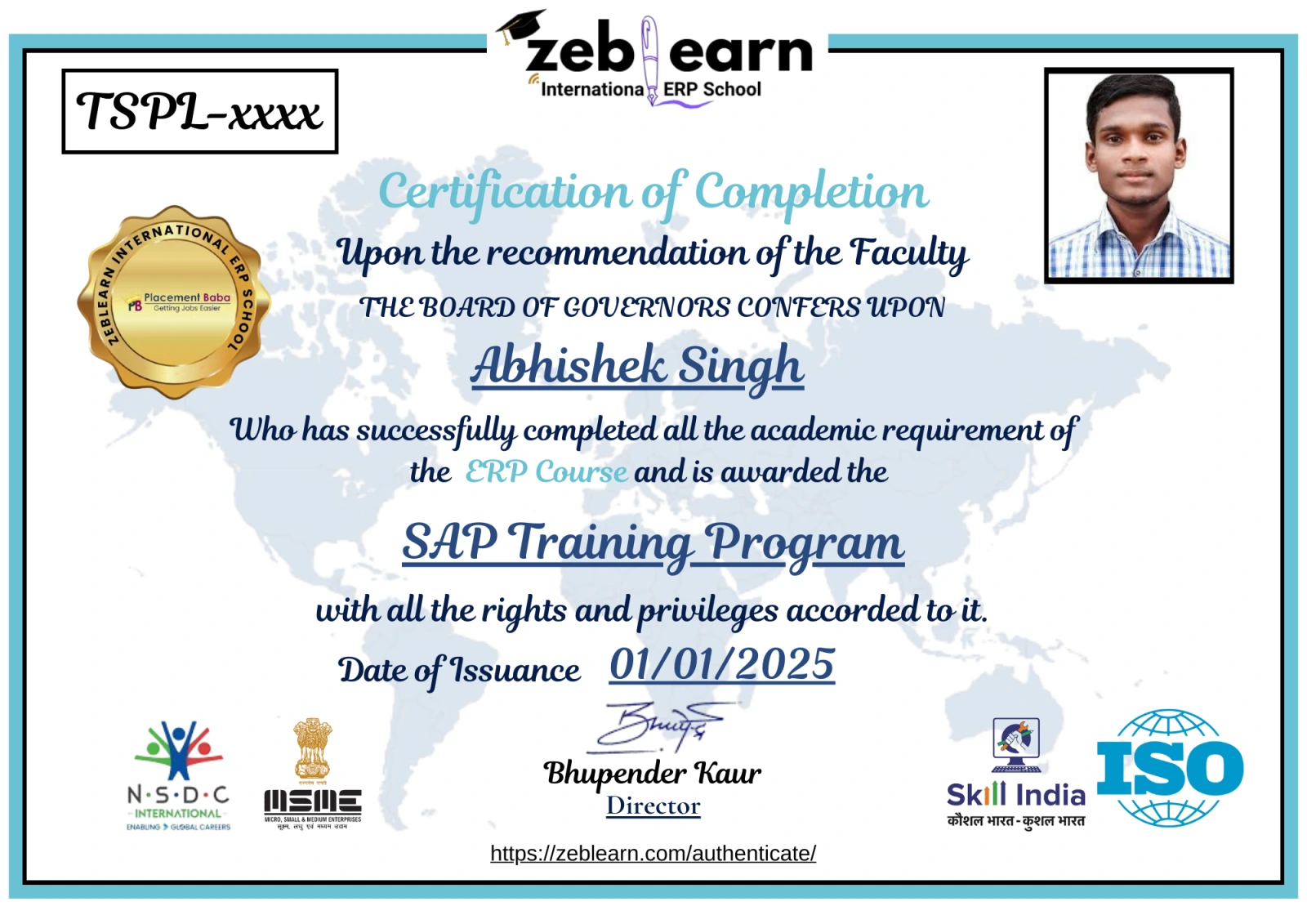
    SAP ABAP Training Certificate

    SAP ABAP Training and Placement Support

    Our SAP ABAP training comes with placement support that starts once you finish the SAP ABAP classes. The placement team works with you step by step until you are ready to face technical interviews:

    1. Resume and LinkedIn Profile: Rewritten to show your SAP ABAP training, coding tasks and final project.
    2. Mock Interviews: Technical practice rounds on SAP ABAP training topics with working SAP ABAP developers, with feedback after each one.
    3. Interview Referrals: Your SAP ABAP training profile shared with our hiring partners.
    4. Revision Access: Recordings of your online ABAP training and study material to revise before interviews.

    This is why learners looking for an SAP ABAP online course with placement choose Zeblearn. Placement support means guidance and referrals; your job offer depends on your interview performance.

    Careers

    SAP ABAP Developer Jobs and Career Path

    After SAP ABAP training and SAP ABAP certification, you can apply for roles such as:

    • Junior SAP ABAP Developer
    • SAP ABAP Developer
    • SAP ABAP on HANA Developer
    • SAP S/4HANA Technical Consultant
    • SAP ABAP Support Consultant (a common first role after SAP ABAP training)

    IT services firms, SAP consulting partners and large companies that run SAP all hire people with SAP ABAP training for these roles. Every SAP module needs ABAP work, so SAP ABAP training is useful everywhere, so you can work with finance, supply chain or HR teams. Knowing the business side helps: for example, an ABAP developer on a finance project works closely with people who did SAP FICO training.

    Over time, someone with SAP ABAP training and SAP ABAP certification can grow into a senior developer, a technical lead or an SAP BTP developer. Developers whose SAP ABAP training covered CDS views, OData and RAP are well placed for SAP S/4HANA projects.

    Why Zeblearn

    What You Get at Zeblearn

    Zeblearn is a premier institute offering training in SAP, Workday, Data Science, Full-Stack Development, Salesforce, Machine Learning, Software Testing and more — available both online and in classroom, for students, working professionals and entrepreneurs.

    • Expert-Led Training
    • Globally Recognized Certifications
    • Dedicated Job Placement Support
    • Hands-On Learning
    • Flexible Learning Options
    • Affordable Course Fees
    • Career Growth Opportunities
    View Courses
    Awards & Recognition
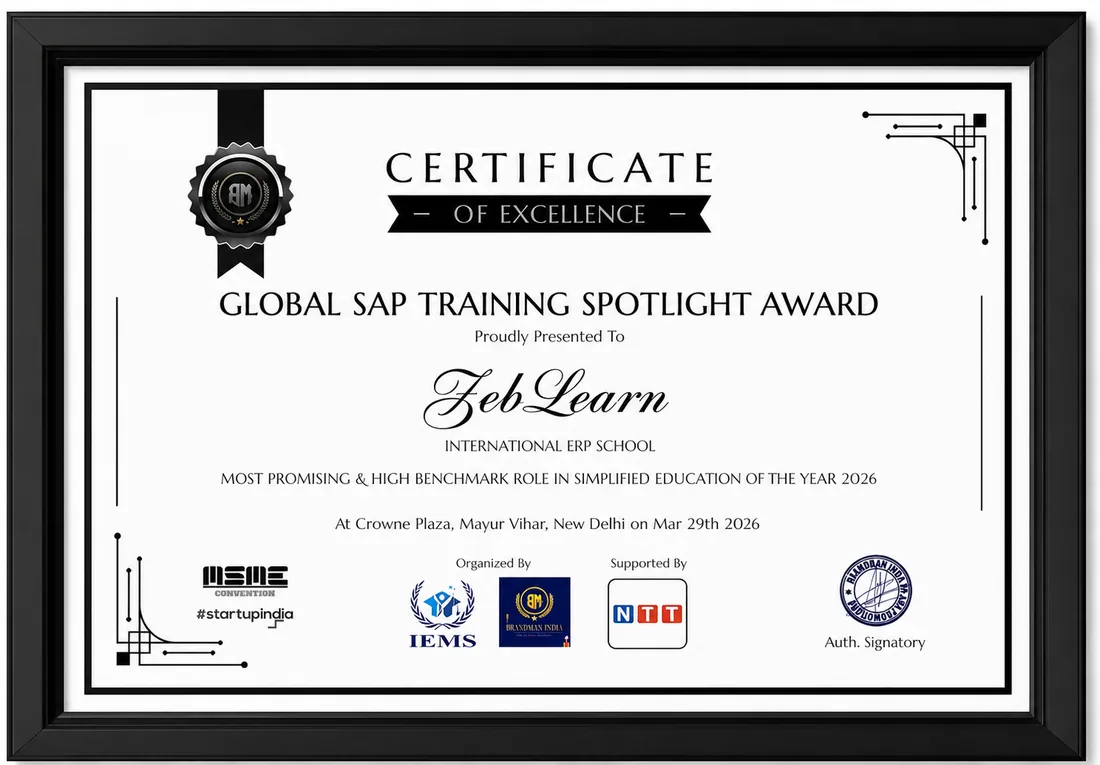
    Global SAP Training Spotlight Award
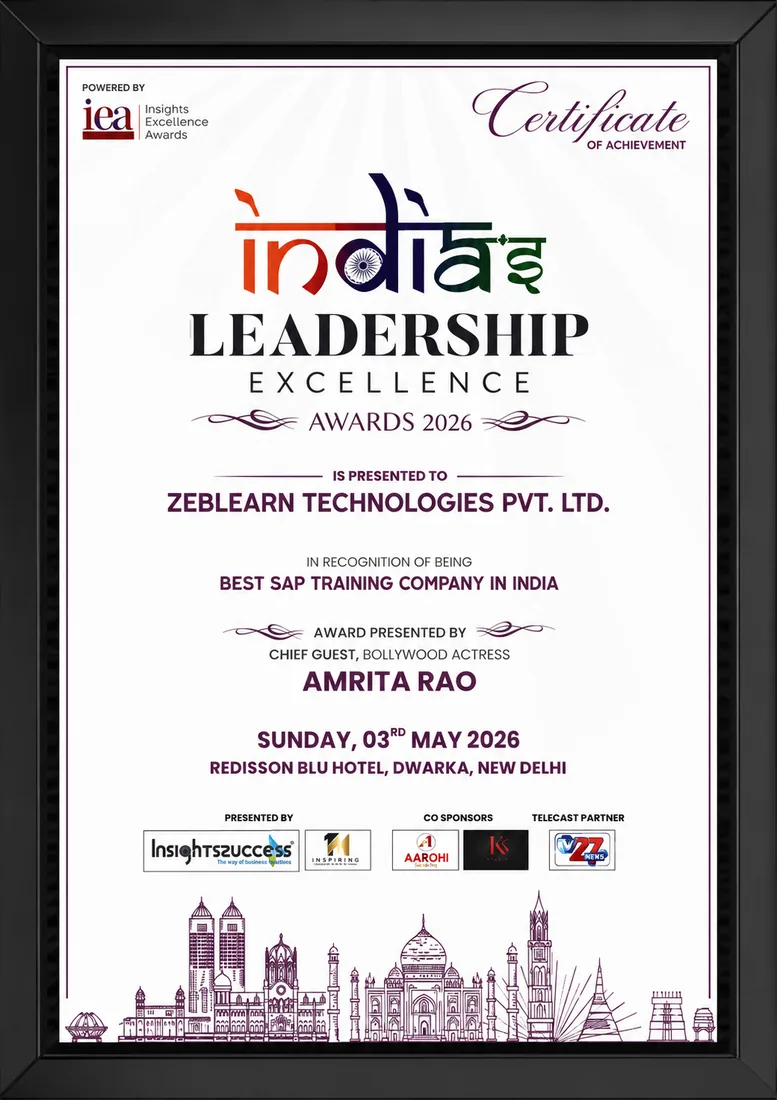
    India's Leadership Excellence Award 2026
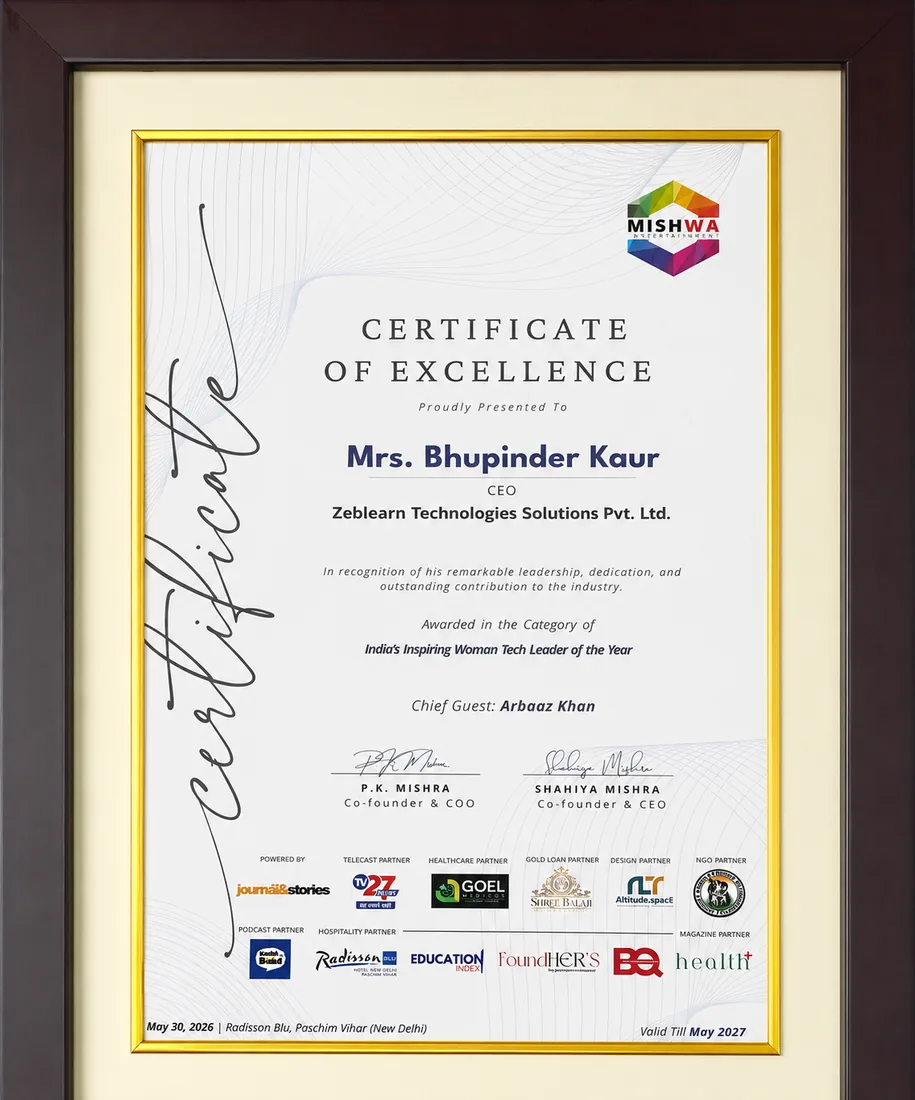
    Inspiring Woman Tech Leader of the Year

    Global SAP Training Spotlight Award

    Brandman India · 2026

    Certificate
    After You Complete

    Career Resources After the Course

    After the SAP ABAP training, you keep access to recordings of your SAP ABAP classes, take part in mock interviews and get career guidance until you are ready for technical interviews.

    Evaluation & Practice Sessions

    Participate in expert-led mock interviews and skill evaluation sessions after program completion.

    Learning Simulation (LMS)

    Lifetime access to LMS with recorded sessions, hands-on practice, and updated learning resources.

    Career & Placement Assistance

    Resume building, profile optimization, interview preparation, and placement guidance from industry experts.

    Live Sessions

    60-Minute Free Webinar with Certificate

    Join our live sessions and earn a free certificate. Limited seats available!

    Upcoming Live Classes

    Sessions from

    Live & Open
    DateTime ISTCourse / ModuleRegister
    Loading upcoming sessions...
    Student Portal

    Everything your batch needs, in one place

    Live classes, recordings, daily practice, case studies and progress tracking — all inside your portal, on any device.

    Live classes, one-click join Next class, time and link with a live countdown
    Every session recorded Revisit any class you missed, any time
    Daily T-Codes A fresh set of SAP transaction codes every day
    Daily interview questions New questions daily, answers hidden until you try
    Daily SAP updates Release changes and certification news as it happens
    Real business case studies Scenarios you configure yourself, step by step
    Hands-on live projects End-to-end work you can talk about in interviews

    Complete resource library Videos, notes, PDFs, ebooks and question banks
    Progress & attendance Track topics, sessions and your attendance record
    Doubts answered by trainers Ask against a class, get a reply on the same thread
    Global certification support Exam codes, mock tests and booking guidance
    Alumni network Referrals and interview intel from placed students
    Enroll Today

    SAP ABAP Training Batches: Online ABAP Training Dates

    StatusDateTypeScheduleTime
    SOLD OUT 23 Nov 2026 Weekend SAT - SUN (08 Weeks) 18:00 - 20:00
    FILLING FAST 28 Nov 2026 Weekday MON - FRI (08 Weeks) 08:00 - 10:00
    AVAILABLE 3 Dec 2026 Weekend SAT - SUN (08 Weeks) 10:00 - 12:00
    Limited Time Offer

    ₹120,000

    ₹30,000

    You save ₹90,000 Enroll Now, Pay Later

    EMI options available · No-cost study now, pay later

    FAQ

    SAP ABAP Training FAQs

    Quick answers to the questions learners ask most about our SAP ABAP training, online ABAP training, fees and SAP ABAP certification.

    The SAP ABAP course fee for SAP ABAP training at Zeblearn is ₹30,000 with EMI options. The SAP ABAP training runs for 8 weeks of 2-hour SAP ABAP classes. The SAP ABAP certification fee is paid to SAP separately.

    Yes, if the SAP ABAP training is live and hands-on. Our online ABAP training has a real trainer, class recordings and coding practice in an SAP system, so you build the same skills from home.

    Yes. B.Tech, BCA, MCA and BSc graduates often start their SAP career with SAP ABAP training and an SAP ABAP course. Expect to begin as a junior developer, and add SAP ABAP certification to stand out.

    For SAP ABAP training, it helps but is not required. Basic logic like variables, loops and a little SQL makes SAP ABAP training easier, and the first SAP ABAP classes start from the basics.

    The current SAP ABAP certification is SAP Certified Backend Developer ABAP Cloud, exam code C_ABAPD, and SAP ABAP training prepares you for it. It is a 3-hour practical exam with a 67% pass score.

    Finish your SAP ABAP training, practise coding in Eclipse after each SAP ABAP training session with ABAP Development Tools, then book the C_ABAPD SAP ABAP certification exam on SAP Learning.

    The SAP ABAP certification fee is set by SAP and paid directly to SAP, not as part of SAP ABAP training. Check the current price in rupees on SAP Learning before booking.

    The SAP ABAP certification is practical. You write and fix real code, so learners who code after every class in their SAP ABAP training find it much easier than those who only read notes.

    Yes. Our SAP ABAP training and SAP ABAP online course cover ABAP on HANA, CDS views, OData services and RAP, which are the skills SAP S/4HANA projects ask for today.

    In SAP ABAP training, RAP, the ABAP RESTful Application Programming Model, is how new Fiori apps and services are built on S/4HANA. You build a complete RAP app during SAP ABAP training.

    A CDS view defines a data model once at the database level, so reports and Fiori apps can reuse it. Creating CDS views is a core topic in SAP ABAP training and SAP ABAP certification.

    Yes, and SAP ABAP certification adds weight. Every SAP module needs custom code, and S/4HANA moves create demand for developers who know CDS, OData and RAP. People with modern SAP ABAP training are well placed.

    Yes. Every one of the SAP ABAP classes in our SAP ABAP training is recorded, so you can revise or catch up on any part of the online ABAP training you missed.

    Yes. Choose the weekend batch of online ABAP training for SAP ABAP training on weekends, or the early-morning weekday SAP ABAP classes, and use the recordings when work gets busy.

    Pick an SAP ABAP online course that offers live SAP ABAP training, real system access, modern S/4HANA topics, SAP ABAP certification preparation and placement help.

    It helps a lot. FICO, MM or SD consultants who take SAP ABAP training or an SAP ABAP online course can read code, debug issues and talk to developers more clearly, which makes them more useful on projects.

    Common roles after SAP ABAP training and SAP ABAP certification are junior SAP ABAP developer, SAP ABAP on HANA developer, S/4HANA technical consultant and SAP ABAP support consultant.

    After SAP ABAP training, good next steps are SAP BTP for cloud development, SAP Fiori for user interfaces, or deeper RAP. Your SAP ABAP training and SAP ABAP certification make each one easier.

    Yes. After SAP ABAP training and the SAP ABAP course you get resume help, technical mock interviews with SAP ABAP developers and interview referrals. It is support, not a job guarantee.


    We use cookies to improve your experience and personalize our site. cookie policy