Which SAP Module Is in Demand in 2027? Pick by Background
Which SAP module is in demand in 2027? Match FICO, MM, SD, ABAP, Basis, BTP and SuccessFactors to your degree, interest and career goal, with a clear pick.

Which SAP Module Is in Demand in 2027? Pick by Background
Quick answer: If you are asking which SAP module is in demand in 2027, the honest answer is that the S/4HANA core modules (FICO, MM, SD, PP), the technical trio (ABAP, Basis, BTP) and cloud modules like SuccessFactors and Ariba all have steady demand. The right pick is the one that matches your degree and work background, because that is the module you will finish and get hired for.
Key takeaways
- Demand in 2027 comes mainly from companies moving off old SAP ECC systems to S/4HANA, and from HR and procurement moving to the cloud.
- Finance and supply chain modules stay busy because every migration touches them.
- Technical modules (ABAP, Basis, BTP) are needed early in every migration and keep growing as companies extend S/4HANA in the cloud.
- “Most in demand” means little if the module does not suit you. Pick by background first, then by demand.
Why does demand for SAP modules shift in 2027?
Demand shifts because a big deadline arrives at the end of 2027. SAP’s mainstream maintenance for its older ERP system (ECC 6.0, enhancement packages 6 to 8) ends on 31 December 2027. Companies can pay extra for support until the end of 2030, but after that they are expected to be on S/4HANA, which SAP has committed to maintain until 2040.
In counselling calls, I often hear “SAP is ending in 2027, so why should I learn it?” That gets it backwards. The old system’s support is ending. The work of moving thousands of companies to the new one is what creates jobs. India is a big part of that work, since many global SAP projects are delivered by teams here, so the answer to which SAP module is in demand in India follows the same pattern.
Here is the timeline that matters for your module choice:
| Date | What happens | What it means for learners |
|---|---|---|
| 31 Dec 2025 | Mainstream maintenance ended for older ECC versions (enhancement packages 0 to 5) | Those companies are already under pressure to move |
| 31 Dec 2027 | Mainstream maintenance ends for ECC 6.0 enhancement packages 6 to 8, including the classic HR system (ERP HCM) | Peak migration work for finance, supply chain, HR and technical roles |
| 31 Dec 2030 | Paid extended maintenance ends | Late movers keep hiring well past 2027 |
| 2040 | S/4HANA maintenance commitment | Skills you learn on S/4HANA stay useful for many years |
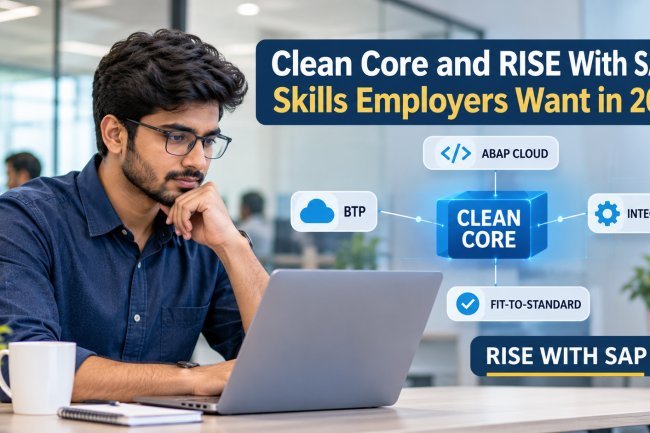
Three other changes shape demand. HR is moving to the cloud through SuccessFactors. Procurement is moving to cloud tools like Ariba. Companies are also told to keep S/4HANA close to standard (often called “clean core”) and build extras on SAP’s Business Technology Platform, which raises the need for BTP skills.
Which SAP module is in demand in 2027? Module by module
Every major module has work in 2027, but the reason for demand is different for each. The table below shows why companies need each one and who it suits best.
| Module | Why companies need it in 2027 | Best suited for |
|---|---|---|
| SAP FICO training | Every migration rebuilds finance first: ledgers, payables, receivables, assets and costing | B.Com, M.Com, CA, CMA, MBA Finance, accountants |
| MM, through our SAP MM course on S/4HANA | Purchasing and stock run through every factory and retail business | Purchase and stores staff, supply chain graduates, MBA Operations |
| SD (Sales and Distribution) | Order-to-cash, from sales order to billing, is part of every rollout | Sales, customer service and commerce graduates |
| Production planning with SAP PP | Manufacturers modernise planning and costing along with the core | Mechanical and production engineers, plant staff |
| SAP QM training for quality roles | Pharma, food and auto companies need inspections and quality records in the system | Quality engineers, lab staff, B.Sc and B.Pharm graduates |
| SAP ABAP training | Years of custom code must be checked, fixed or rebuilt during each move | B.Tech, BCA, MCA, developers |
| Basis, through our SAP Basis course | Technical conversions, system copies and upgrades need Basis teams first | System and database administrators, IT support staff |
| SAP BTP training | Clean core pushes new apps, automation and integrations onto BTP | Developers and technical consultants who want cloud skills |
| SAP SuccessFactors training | The classic HR system loses mainstream maintenance in 2027, and new HR features come in SuccessFactors | MBA HR, HR executives, recruiters, payroll staff |
| HCM, through our SAP HCM course | Many companies still run SAP HR on premise or move to the S/4HANA HR version, so support work continues | HR and payroll staff in companies that keep on-premise HR |
| Ariba, through SAP Ariba training | Sourcing, contracts and supplier invoices are moving to the cloud | Procurement and vendor management staff |
If you want the full picture of what each module does before choosing, it helps to treat this table as a short version of the full modules list and details. If you came here looking for the best SAP modules to learn for 2027, this table is the short list. Modules fall into three families: functional (FICO, MM, SD, PP, QM, HCM), technical (ABAP, Basis, BTP) and cloud (SuccessFactors, Ariba).
Which SAP module is best for freshers?
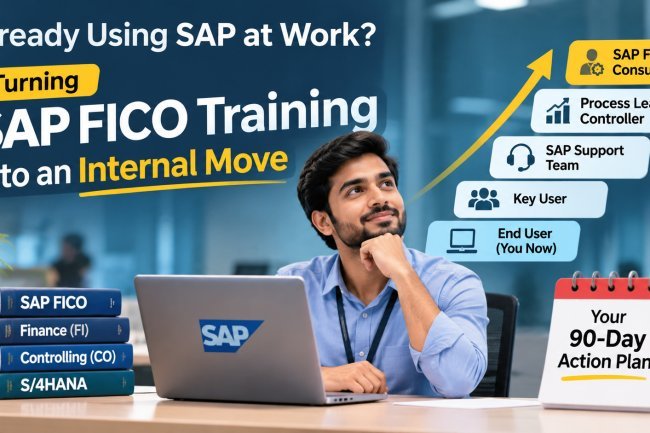
When freshers ask me which SAP module is in demand in 2027, my first question is always about their degree. For freshers, the best module is the one closest to your degree, because interviewers expect you to know the business side before the system side. A commerce graduate who learns FICO can explain an accrual in an interview. An engineer who learns FICO usually cannot, at least not yet.
Pick by background
| Your background | First choice | Good second choice | Why |
|---|---|---|---|
| B.Com, M.Com, CA, CMA | FICO | MM | Accounting carries straight over; MM adds the purchasing link |
| MBA Finance | FICO | SD | Strong in analysis; SD shows how revenue is recorded |
| MBA HR | SuccessFactors | HCM | HR processes carry over; cloud HR is where new work is |
| MBA Operations, supply chain | MM | Ariba | Purchasing and stock are what you studied |
| Mechanical, production engineering | PP | QM | Production and quality are close to your degree |
| B.Sc, B.Pharm, quality roles | QM | PP | Inspections and batches match your work |
| B.Tech CS, BCA, MCA | ABAP | BTP | Coding skills carry over; BTP adds cloud development |
| IT support, system admin | Basis | BTP | System and access work matches your experience |
A five-question picker
Answer quickly with A or B:
- Do you enjoy numbers and accounts (A) or writing code (B)?
- Would you rather fix a business process (A) or fix a system problem (B)?
- Did your degree or job involve money, stock or people (A), or software and servers (B)?
- Do you like talking to users and managers (A) or working mostly with technical teams (B)?
- Are you happy to learn configuration without coding (A), or do you want coding to be your main skill (B)?
Mostly A points to functional modules (FICO, MM, SD, PP, QM, SuccessFactors, HCM, Ariba). Mostly B points to technical modules (ABAP, Basis, BTP). Then use the background table to narrow it to one.
Is the module in demand also easy to learn?
Not always. Some modules are easier to start but harder to stand out in. Others take longer to learn but have fewer trained people. Here is an honest view of which SAP module is easy to learn for each type of learner:
| Module | Coding needed? | Starting difficulty | What makes it harder later |
|---|---|---|---|
| FICO | No | Easy for commerce, hard for others | Controlling (CO) and integration with other modules |
| MM | No | Moderate | Pricing, valuation and its link to finance |
| SD | No | Moderate | Pricing procedures and billing setup |
| PP | No | Moderate for engineers | Planning runs and costing links |
| QM | No | Moderate | Inspection setup across plants |
| SuccessFactors | No | Easy for HR | Many separate cloud modules to choose from |
| ABAP | Yes | Moderate for coders | Newer ABAP Cloud rules for S/4HANA |
| Basis | No, but scripting helps | Moderate for IT staff | Cloud operations and upgrades |
| BTP | Often yes | Harder for beginners | Wide platform with many services |
The pattern is simple. A module feels easy when it matches what you already know. That is one more reason to pick by background.
Which SAP module is highly paid in India?
There is no single highly paid module. Pay in India depends far more on your S/4HANA project experience, the type of employer and how well you understand integration than on the module name.
In general, pay tends to rise when:
- you have worked on a real S/4HANA migration or rollout, not just a course
- you know how your module connects with others, such as MM with finance, or PP with costing
- you hold skills fewer people have, such as BTP, clean core development or cloud HR
- you can talk to business users and explain processes clearly
So instead of chasing the “highest paid” module, choose the one you can become genuinely good at. Depth in a module that suits you pays better over time than average knowledge in a fashionable one.
Which SAP module is in demand in future, after 2027?
Demand does not stop at the 2027 deadline. Companies that pay for extended maintenance will keep migrating until 2030. Those already on S/4HANA need support, upgrades and improvements every year, and S/4HANA itself is maintained until 2040.
Looking further ahead, a few areas are likely to grow:
- Cloud and BTP skills, as companies keep the core clean and build extras outside it
- Cloud HR and procurement, through SuccessFactors and Ariba
- Data and integration, since every system has to talk to others
- Process knowledge alongside AI. SAP is adding its AI assistant, Joule, into its products. AI can speed up routine tasks, but someone still has to understand how the finance, purchasing or HR process should work.
So if you are wondering about the years after 2027, the safest bet is a core module you understand deeply, plus one cloud or integration skill on top.
Two learners, two different picks
Take a B.Com graduate from Pune who works as an accounts assistant. She wonders whether to learn ABAP because she has heard developers earn more, but she has never written code and does not enjoy it. FICO is the better pick for her. Her accounting background means she can follow the course from day one and answer interview questions with real examples from her job.
Now picture an MCA graduate from Hyderabad with the opposite question: should he learn FICO because finance roles seem common? He loves coding and has no accounting background. ABAP, followed by BTP, suits him far better. He can use skills he already has and grow into cloud development as companies move to S/4HANA.
Same year, same demand, different right answers.
Who should not pick a module by demand alone?
Demand matters, but it should be your second filter, not your first. Be careful if:
- you are picking a module only because a friend or an advert said it pays more
- the module needs skills you dislike, such as coding or accounting
- you have no time to practise, since every module needs hands-on work in a live system
- you expect any course to guarantee a job; training helps, but interviews and practice decide the outcome
If any of these fit you, slow down and choose by background first. That is how learners finish the course and actually use it.
How Zeblearn helps you choose and learn
At Zeblearn, SAP courses run as live, trainer-led online classes with recordings, with a weekday morning batch and a weekend batch. You practise in an SAP S/4HANA system, so you learn on the version companies are moving to. Placement support covers resume and LinkedIn help, mock interviews and interview referrals. It is support, not a job guarantee. The Zeblearn team also helps you choose and book the right certification exam.
Most importantly, a counsellor can look at your degree and work background and tell you honestly which module fits, even if that means a different course from the one you came for.
Your next step
The question of which SAP module is in demand in 2027 has a clear answer: core S/4HANA modules, technical and cloud skills, and cloud HR and procurement all have work. But the best module for you is the one that matches your background, because that is the one you will finish, practise and talk about confidently in interviews.
Go through the background table and the five-question picker again, and note your top two choices. If you want an honest second opinion, you can talk to a Zeblearn counsellor before you decide.