How to Become an SAP Consultant in 2027: Step-by-Step Guide
A clear 7-step path to becoming an SAP consultant in 2027, from choosing a module to landing your first role and growing through projects.

How to Become an SAP Consultant in 2027: Step-by-Step
If you want to know how to become an SAP consultant in 2027, the short version is this: pick one module that fits your background, learn it on S/4HANA, practise until you can explain a full business process, get a first SAP role, and grow into consulting through real project work. There is no single course or exam that turns you into a consultant overnight.
This guide breaks that path into seven clear steps, with what to focus on at each one. It also explains why 2027 is a sensible year to start, what has changed for new consultants, and the mistakes that slow most beginners down.
What does an SAP consultant actually do?
An SAP consultant helps a company set up, change and support SAP software so that it matches how the business works. SAP is enterprise resource planning (ERP) software, which means one connected system that runs finance, purchasing, sales, production, HR and more.
Consultants usually fall into three broad tracks:
| Track | What the consultant does | Common modules | Coding needed? |
|---|---|---|---|
| Functional | Understands a business process and configures SAP to run it | FICO (finance), MM (purchasing), SD (sales), PP (production), QM (quality) | No |
| Technical | Builds custom programs, reports and system fixes, or runs the system itself | ABAP (development), Basis (administration) | ABAP yes; Basis needs scripting more than coding |
| Cloud and integration | Builds extensions, apps and connections outside the core system | BTP, SuccessFactors, Ariba | Often, depending on the role |
A typical week for a functional consultant might include a meeting with the finance team about a new approval rule, changing settings in a test system, testing the change, fixing a user’s issue and writing a short document. Technical consultants spend more time in code or system tools, but they also need to understand the business reason behind each request.
Why 2027 is a good year to start
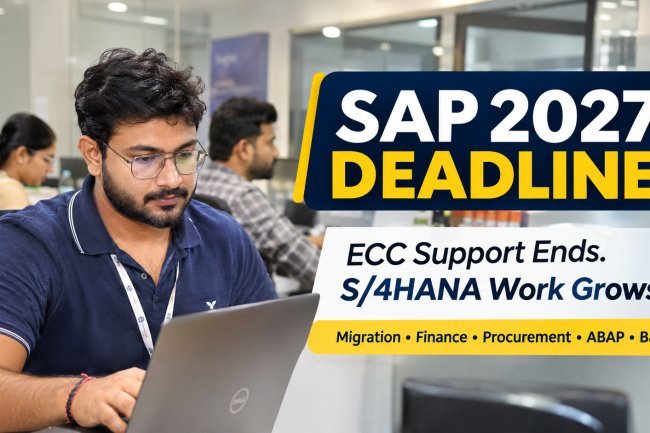
SAP has committed to maintaining S/4HANA, its current ERP system, until the end of 2040. Its older system, often called ECC, gets mainstream maintenance only until the end of 2027, with optional extended maintenance until the end of 2030. That means thousands of companies are in the middle of moving from the old system to the new one.
The move is far from finished. Gartner research reported that at the end of 2024, only about 39% of roughly 35,000 ECC customers had moved to S/4HANA, and the firm projected that more than a third could still be on the old system in 2030. For new consultants, this means migration, testing and support work will continue for several years, not stop at the 2027 deadline.
There is one important point, though. Companies now want people who know S/4HANA and newer cloud tools, not just the older system. If you start in 2027, learn the current version from day one.
How to become an SAP consultant in 2027: 7 steps
Step 1: Choose a track that fits your background
Your first decision matters more than any other. The easiest consultant path is usually the one closest to what you already know, because interviews test the business side as much as the system side.
- Commerce, CA, CMA or MBA Finance: finance, through SAP FICO training.
- Purchase, stores, supply chain or MBA Operations: purchasing and inventory, through an SAP MM course on S/4HANA.
- B.Tech, BCA or MCA graduates who enjoy coding: development, through SAP ABAP training.
- HR or payroll staff: cloud HR through SuccessFactors.
- Engineers from plants: production (PP) or quality (QM).
Picking a module only because someone said it pays more is a common way to waste months. Choose the one you can genuinely become good at.
Step 2: Build the business basics first
Every SAP module sits on top of a business process. A finance consultant must understand journal entries, accruals and closing. A purchasing consultant must understand purchase orders, goods receipts and invoice checks. A developer must understand what the business user is trying to achieve.
If your basics are weak, spend a few weeks fixing them before your SAP course starts. It will make every class easier to follow.
Step 3: Learn one module properly on S/4HANA
Learn one module deeply rather than three modules lightly. Make sure you learn it on S/4HANA, because that is where companies are moving. It also introduces concepts such as the Business Partner (one record for customers and vendors) and the Universal Journal (one table for finance and controlling data).
Look for training that gives you hands-on time in a live system, not just slides or recorded demos. Watching someone configure a setting is very different from doing it yourself.
Step 4: Practise until you can explain a full process
This is the step most beginners rush. Build a small end-to-end project in a practice system. For finance, that could mean creating a company code, posting vendor and customer invoices, running a payment and closing a month. For purchasing, it could mean running a full procure-to-pay cycle from purchase request to vendor payment.
Then explain the whole flow out loud in about five minutes. If you can answer “what happens next, and why?” at every step, you are ready for interviews.
Step 5: Decide whether and when to get SAP certified
SAP certification is an official exam set by SAP. It helps, especially for consulting firms and jobs abroad, but it does not replace hands-on skill.
Here is how it works today. You can buy a stand-alone exam package or take an SAP Learning Hub subscription, which includes several exam attempts a year along with learning resources. SAP certifications are valid for 12 months. You keep them active by passing a short yearly assessment through the Learning Hub, or by retaking the full exam if you do not have a subscription.
A sensible order is to practise first and certify once you feel confident in the system. A certificate with no practice behind it rarely survives a technical interview.
Step 6: Land your first SAP role
Very few people go straight from a course into a full consultant role. The realistic first roles are:
- SAP end user or finance, purchase or HR executive in a company that runs SAP
- SAP support analyst, handling tickets from users
- Junior or trainee consultant in a consulting firm
Each of these gives you real users, real data and real deadlines, which is exactly what consulting firms look for later. Write your resume around what you did in the system, not just the topics you studied.
Step 7: Grow into a consultant through real projects
Projects are where you learn how SAP is designed for a business, not just used. Look for chances to join an implementation, a rollout to a new plant or country, or an S/4HANA migration. Offering to help with testing is often the easiest way in.
On projects you will also work with other teams. Developers build custom reports, Basis teams manage system access and transports, and newer projects build extensions and automation on SAP’s Business Technology Platform. A basic understanding of SAP BTP training topics will help you follow those conversations.
You are ready to call yourself a consultant when you can take a business requirement, suggest options, set up the solution, test it and explain your choice to the client.
Skills that set 2027 consultants apart
Module knowledge gets you in the door. These skills help you grow:
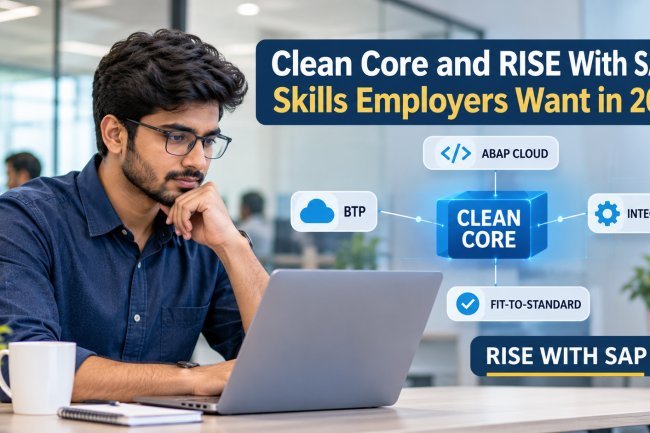
- Clean core thinking. Companies are encouraged to keep S/4HANA close to standard and build extras outside it. Consultants who understand this are in demand.
- Working with AI tools. SAP is building its AI assistant, Joule, into its products. Consultants need to know what AI can automate and how to check its output.
- Data and integration. Every process passes data to another. Understanding those links makes you far more useful.
- Communication. Explaining a complex setting in simple words to a finance manager is a skill employers notice quickly.
This matches wider job trends. The World Economic Forum’s Future of Jobs Report 2025 names AI and big data, networks and cybersecurity, and technological literacy as the fastest-growing skills to 2030.
Common mistakes that slow beginners down
- Learning several modules at once and mastering none.
- Memorising transaction codes instead of understanding processes.
- Skipping hands-on practice and relying on recorded videos.
- Applying only for senior consultant roles straight after a course.
- Listing projects on a resume that you cannot explain in an interview.
- Expecting a course or certificate alone to guarantee a job.
How long does it take to become an SAP consultant?
There is no fixed timeline, and anyone who promises one is guessing. As a rough guide, learning one module usually takes two to three months of structured classes. Becoming confident in the system takes a few more months of practice. Moving from a first SAP role into a consultant role typically takes one to two years of real work, depending on the projects you get.
People with a matching background, such as an accountant learning FICO, often move faster because they only need to learn the system, not the business side.
Where Zeblearn fits in
Zeblearn offers SAP courses as live, trainer-led online classes with recordings, with weekday and weekend batches for working learners. You practise in an SAP S/4HANA system, and the training includes certification preparation. Placement assistance covers resume and LinkedIn help, mock interviews and interview referrals. It is support, not a job guarantee.
If you are not sure which track suits you, the most useful next step is a conversation about your background. You can talk to a Zeblearn counsellor to get a clear view of which module and route fit your situation.
Final takeaway
Learning how to become an SAP consultant in 2027 is less about finding a shortcut and more about following a clear order:
- Choose the right track.
- Build the business basics.
- Learn one module on S/4HANA.
- Practise until you can explain it.
- Certify when you are ready.
- Take a first SAP role.
- Grow through projects.
The migration work running past 2027 gives new learners a real window, but only those with practical skills will get the most from it.