SAS Training: Base Programming, Statistics and Reporting

SAS training is for graduates, analysts and pharma, banking and insurance staff who want to work with data in the language many regulated industries trust. Over 8 weeks of live 2-hour classes, you read and clean data, combine tables with merges and SQL, and summarise results with PROC MEANS and PROC FREQ. You run t-tests, ANOVA and regression, build charts and reports in PDF and HTML, and automate monthly jobs with macros. You also learn to read the log and fix errors fast, a skill every SAS certification exam tests. Every class is recorded, and you finish with a credit card portfolio project and guidance for the A00-231 Base Programming exam.
4.9 out of 5 based on 14507 votes
google

4.8/5

sulekha

4.8/5

urbanpro

4.7/5

justdial

4.9/5

facebook

4.9/5


ISO
NSDC
Ministry of Corporate Affairs India
Skill India

Calculate Your Course Fee


By requesting here, I agree to Zeblearn's Terms & Conditions and Privacy Policy

Our Partners

Zeblearn Certification Partners

Banks, clinical research firms and insurers rely on SAS for data they must defend. The course follows the steps a real analytics team takes.

project-management-institute
adobe
autodesk
meta
cisco
microsoft-certified-professional
information-technology-specialist
unity
intuit
apple
esrp
ic3-digital-literacy-certification
project-management-institute
adobe
autodesk
meta
cisco
microsoft-certified-professional
information-technology-specialist
unity
intuit
apple
esrp
ic3-digital-literacy-certification
Our Students Now Work At Top MNCs
8500+ Students Placed
Nishant Kaushik Placed
Nishant Kaushik
SAP MM
manideepak Upskilled
manideepak
Manager
Hari Shankar Jha Career switch
Hari Shankar Jha
Senior System Admin
alok kumar singh Upskilled
alok kumar singh
sap hcm
Jeevak Placed
Jeevak
Consultant
Abhijit S. Getme Upskilled
Abhijit S. Getme
Consultant Engineer
Kartik Singh Placed
Kartik Singh
SAP SD
Hemant Khainar Upskilled
Hemant Khainar
SAP MM Consultant
Neeraj Khanna Placed
Neeraj Khanna
SAP MM
Burna Vinay Kumar Placed
Burna Vinay Kumar
SAP SD Consultant
Shubham Placed
Shubham
SAP ABAP Consultant
Shashikant Career switch
Shashikant
Structure Engineer
Khushbu Career switch
Khushbu
Sap hcm
About the Course

What Is SAS?

SAS is a software suite and programming language for managing, analysing and reporting data. Banks use it for credit risk, pharma companies for clinical trial data, and insurers and retailers for customer analysis. Its code is short and readable, and its output is trusted in regulated industries.

This SAS training teaches Base programming first, then statistics, SQL, macros and reports. You write real programs in every class, so by the end you can take a messy file and turn it into a clean, checked report.

What You Can Do After SAS Training

  • Read CSV, Excel and database files into datasets.
  • Clean data: fix missing values, recode fields and remove duplicates.
  • Combine datasets with merges, appends and SQL joins.
  • Summarise data with PROC MEANS, PROC FREQ and cross tables.
  • Run t-tests, ANOVA, chi-square tests and regression, and read the output.
  • Build charts with PROC SGPLOT and reports in PDF, HTML and RTF.
  • Write macros that repeat a monthly job with one change.
  • Read the log, find errors and fix them quickly.

How a Program Is Built

Every program mixes two kinds of steps. The DATA step reads and changes data, one row at a time. PROC steps run ready-made procedures on a whole dataset, such as sorting, counting or modelling.

PartWhat It DoesExample
LIBNAMEPoints to a folder or database of datasetsA library for monthly card data
DATA stepCreates or changes a datasetFlag accounts 90 days overdue
PROC stepRuns a procedure on a datasetCount overdue accounts by city
LogShows notes, warnings and errorsA warning for an uninitialised variable
ODSSends output to PDF, HTML or ExcelA one-page PDF for managers

One Report in Practice: A Mumbai Card Portfolio

Picture a credit card team in Mumbai that needs a monthly report on late payments. The raw file has 5 lakh rows, some with blank dates and repeated customer IDs. A DATA step cleans the dates, removes duplicates and flags every account more than 90 days late.

A SQL join adds city and income band from a customer table. PROC FREQ counts late accounts by city, and a logistic regression checks which factors raise the risk of default. PROC SGPLOT draws a trend chart, and ODS writes everything to a PDF.

The whole job is then wrapped in a macro, so next month only the date changes. In the SAS training you build this project from start to finish.

Where SAS Training Pays Off Most

IndustryTypical Work
Banking and financeCredit risk models, fraud checks, regulatory reports
Pharma and clinical researchTrial datasets, tables, listings and figures
InsuranceClaims analysis and pricing data
Retail and telecomCustomer segments, churn and campaign results

SAS, Python or R?

Python and R are free and popular for machine learning. This one is paid, but it remains the standard in many banks and clinical research firms, where validated code and audit trails matter. Many analysts take SAS training for these jobs and add Python later; the logic of cleaning and testing data carries over.

Setup Before Real Work

On a project, an analyst first sets up libraries that point to the team's data, then checks formats, lengths and date types, because most errors start there. Common formats and labels are defined once and reused. Programs are kept in a fixed order: import, clean, combine, analyse, report. Options such as log detail and output destinations are set at the top, so every run is repeatable and easy to review.

Common Procedures and Statements

Procedure or StatementWhat It Does
PROC IMPORTReads CSV or Excel files into a dataset
PROC SORTSorts data and removes duplicates
MERGE with BYJoins sorted datasets in a DATA step
PROC SQLQueries and joins data with SQL
PROC MEANS / PROC FREQSummary statistics / counts and cross tables
PROC TTEST / PROC ANOVACompare means between groups
PROC REG / PROC LOGISTICLinear and logistic regression
PROC SGPLOTBar, line, scatter and histogram charts
PROC REPORTFormatted tables for reports
%MACRO / %MENDStart and end a reusable macro

Key Terms in One Line Each

  • Dataset: a table of rows (observations) and columns (variables).
  • Library: a named location that holds datasets.
  • WORK library: temporary storage that clears when the session ends.
  • Format: how a value is shown, such as a date or currency.
  • Informat: how raw text is read into a value.
  • Missing value: a blank, shown as a dot for numbers.
  • Macro variable: a stored piece of text reused across code.
  • p-value: the chance of a result this strong if there is no real effect.
  • Base programming: the core language, DATA step and main procedures.
  • Studio: the browser-based editor for writing and running code.

Prerequisites for This SAS Course

Comfort with Excel and basic statistics such as averages and percentages helps most. B.Sc. Statistics, B.Com, B.Tech, MBA, pharmacy and life science graduates all do well. No earlier coding is needed.

Week 1 of the SAS training covers the environment, datasets and simple programs, so complete beginners can follow.

Week-by-Week Plan

WeekModulesBy the End You Can
11 Basics and environmentWrite and run simple programs
22 Reading and creating dataImport files and build datasets
33 Cleaning and transformingFix missing values and recode fields
44 Combining data, 5 PROC SQLMerge and join datasets
56 Descriptive and inferential statisticsSummarise data and run tests
67 Regression and advanced analysisBuild and read regression models
78 Reports and charts, 9 MacrosAutomate a monthly report
810 Debugging, 11 ProjectPresent the card portfolio report

Practice Software Access

You practise in SAS Studio in the browser. Independent learners can also use the free OnDemand for Academics edition, and every class is recorded. Ask the team which environment your batch uses.

Live Classes or Free Tutorials?

Free tutorials teach syntax well. They do not review your code or explain why your merge doubled the rows. Live SAS training gives you a trainer who reads your log with you, answers doubts in class and checks your project.

How SAS Training Fits With Other Courses

For a wider view of analytics and machine learning, see the data analytics and data science course. Many analysts also add Python for data analytics and Power BI for dashboards.

Course Details and Fees

ItemDetails
Duration8 weeks, 2-hour live classes
BatchesWeekday mornings or weekends
LevelBeginner to working analyst
FormatLive online with a trainer, every session recorded
Syllabus11 modules, ending with a reporting project
CertificateZeblearn course certificate, plus A00-231 exam guidance
Course feesRs 75,000, with EMI

Not sure this course fits your background? Book a free demo class and ask the trainer.

Curriculum

SAS Training Syllabus

Eleven modules move from first programs to automated reports: environment, reading data, cleaning, combining, SQL, statistics, regression, reports, macros, debugging and a project.

Overview of SAS
  • Introduction to SAS Software
  • History and Evolution of SAS
  • Applications of SAS

  • SAS Environment
  • SAS Interface: Windows, Menus, and Commands
  • Navigating SAS Windows (Editor, Log, Output)
  • Creating and Managing SAS Programs
  • SAS Data Sets
  • Creating and Managing SAS Data Sets
  • Importing and Exporting Data
  • Using LIBNAME and DATA Statements

  • Data Manipulation
  • Data Step Processing
  • Reading and Writing Data from Various Formats
  • Conditional Processing with IF-THEN Statements

  • Data Cleaning
  • Identifying and Handling Missing Data
  • Data Transformation and Recoding
  • Using Functions for Data Manipulation
  • Descriptive Statistics
  • Summarizing Data
  • Frequency and Crosstabulation Tables
  • Descriptive Statistics Procedures (PROC MEANS, PROC FREQ)

  • Inferential Statistics
  • Hypothesis Testing
  • T-Tests, ANOVA, and Chi-Square Tests
  • Correlation and Regression Analysis
  • Advanced Statistical Procedures
  • Multivariate Analysis (Factor Analysis, Cluster Analysis)
  • Time Series Analysis
  • Survival Analysis

  • SAS Macros
  • Introduction to Macros
  • Macro Variables and Macro Programs
  • Automating Tasks with Macros

  • SAS SQL
  • Introduction to PROC SQL
  • Querying Data with SQL
  • Joining and Merging Data Sets
  • Creating Reports
  • PROC REPORT and PROC TABULATE
  • Customizing Reports with ODS (Output Delivery System)
  • Generating HTML, PDF, and RTF Reports

  • Data Visualization
  • Using PROC SGPLOT and PROC SGPANEL
  • Creating Bar Charts, Pie Charts, and Histograms
  • Advanced Graphing Techniques
  • Efficient SAS Programming
  • Best Practices for SAS Programming
  • Debugging and Error Handling
  • Optimizing SAS Code

  • SAS Functions
  • Character Functions
  • Numeric Functions
  • Date and Time Functions
  • Beyond Learning

    We empower you with skills that land your dream job.

    By requesting here, I agree to Zeblearn's Terms & Conditions and Privacy Policy

    Certification

    SAS Certification: The Base Programming Exam

    The usual first SAS certification is SAS Certified Specialist: Base Programming Using SAS 9.4. It is issued by the vendor itself and taken through Pearson VUE. It tests the same skills SAS training drills: reading data, managing data, fixing errors and producing reports.

    Part of this SAS certification exam asks you to write and run code, so practice in a live editor matters more than memorising answers.

    Exam PointDetails
    Exam IDA00-231
    Questions40 to 45 multiple choice and short answer
    Time135 minutes
    Pass score725 on a 200 to 1,000 scale
    VersionSAS 9.4 M5
    FeeUSD 180 in most countries; student discounts exist

    What the SAS Certification Exam Covers

    Managing data carries the most weight, at about 35 to 40 percent. Access and create data structures is about 20 to 25 percent, and error handling and reports are each about 15 to 20 percent.

    How to Prepare for the SAS Certification

    1. Finish the classes and the card portfolio project.
    2. Practise data management tasks most, since they carry the highest weight.
    3. Fix errors from real logs until you spot them quickly.
    4. Take the free official practice exam, then book a date.

    Is a SAS Certification Needed for a Job?

    It helps more than in many fields. Clinical research firms and banks often list a SAS certification in job posts, especially for freshers. Experienced analysts are judged mainly on their code and projects.

    Zeblearn Certificate and Vendor Certification Are Different

    The Zeblearn certificate shows you finished this course and project. Only the vendor issues a SAS certification, after you pass its exam. List them under separate headings on your resume.

    SAS Training Skills Check

    Answer short questions on datasets, procedures and statistics. Your score shows what to revise first.

    Take Free Practice Test
    SAS Training Certificate
    Careers

    Jobs After SAS Training

    Clinical research organisations in Hyderabad, Bengaluru, Chennai and Mumbai hire SAS programmers in large numbers. Banks, insurers and analytics firms in Mumbai, Pune and Gurugram use the tool for risk and reporting, often for clients abroad.

    RoleWhat You Do
    SAS ProgrammerWrite programs that clean data and build reports
    Clinical SAS ProgrammerPrepare trial datasets, tables and listings
    Data AnalystAnswer business questions with data and charts
    Risk AnalystTrack credit and fraud risk for a bank
    Statistical ProgrammerRun models and checks for statisticians

    Career Roadmap: From Learner to Senior Programmer

    1. Start: graduate who completes SAS training and the Base exam.
    2. Junior programmer or analyst: often right after, running set reports.
    3. Programmer: often after 2 to 3 years, writing macros and owning outputs.
    4. Senior or lead: often after 5 years or more, reviewing code and guiding a team.

    Pay depends on experience, city and employer, so we do not quote figures.

    SAS Interview Questions With Short Answers

    1. DATA step or PROC step? DATA steps build or change data; PROC steps analyse or report on it.
    2. MERGE or PROC SQL join? MERGE needs sorted data and a BY variable; SQL does not need sorting.
    3. How do you remove duplicates? PROC SORT with NODUPKEY on the key fields.
    4. Format or informat? An informat reads raw text; a format controls how a value is shown.
    5. Why use a macro? To repeat the same code with small changes, such as a new month.
    6. What does a WHERE clause do differently from IF? WHERE filters rows as they are read; IF filters after.

    7. How do you read a log? Check every note, warning and error, starting from the first one.
    8. What is a p-value? The chance of seeing a result this strong if there were no real effect.

    Placement Support

    • Resume: your SAS training project and code samples presented for hiring teams.
    • Mock interviews: coding, statistics and log-reading questions with feedback.
    • Referrals: your profile shared with companies hiring through Zeblearn.
    • Exam help: guidance on when you are ready for the Base exam.

    We prepare you and open doors; the offer depends on your interview.

    Why Zeblearn

    What You Get at Zeblearn

    Zeblearn is a premier institute offering training in SAP, Workday, Data Science, Full-Stack Development, Salesforce, Machine Learning, Software Testing and more — available both online and in classroom, for students, working professionals and entrepreneurs.

    • Expert-Led Training
    • Globally Recognized Certifications
    • Dedicated Job Placement Support
    • Hands-On Learning
    • Flexible Learning Options
    • Affordable Course Fees
    • Career Growth Opportunities
    View Courses
    Awards & Recognition
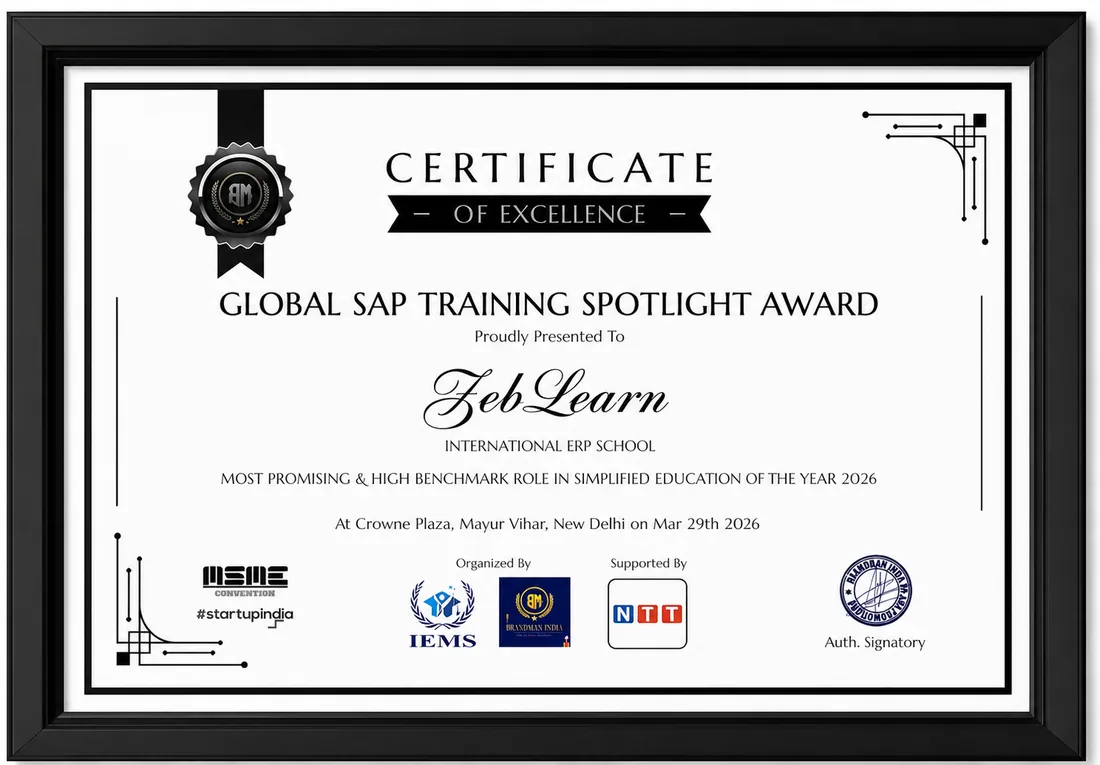
    Global SAP Training Spotlight Award
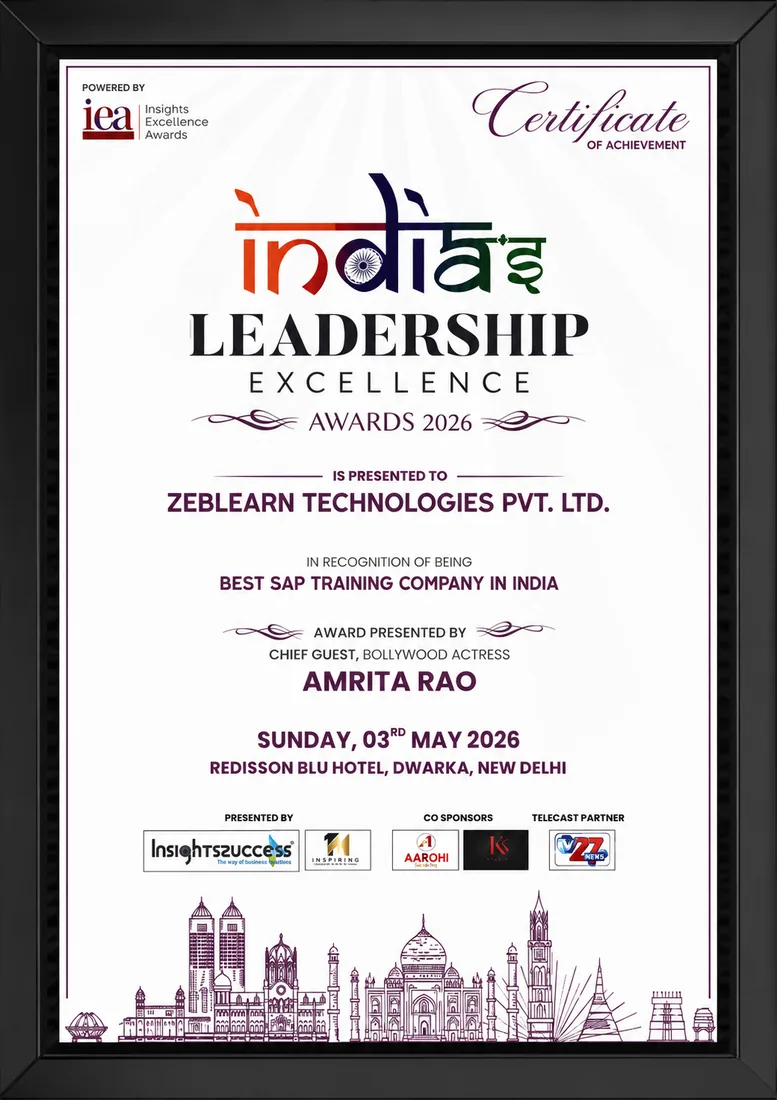
    India's Leadership Excellence Award 2026
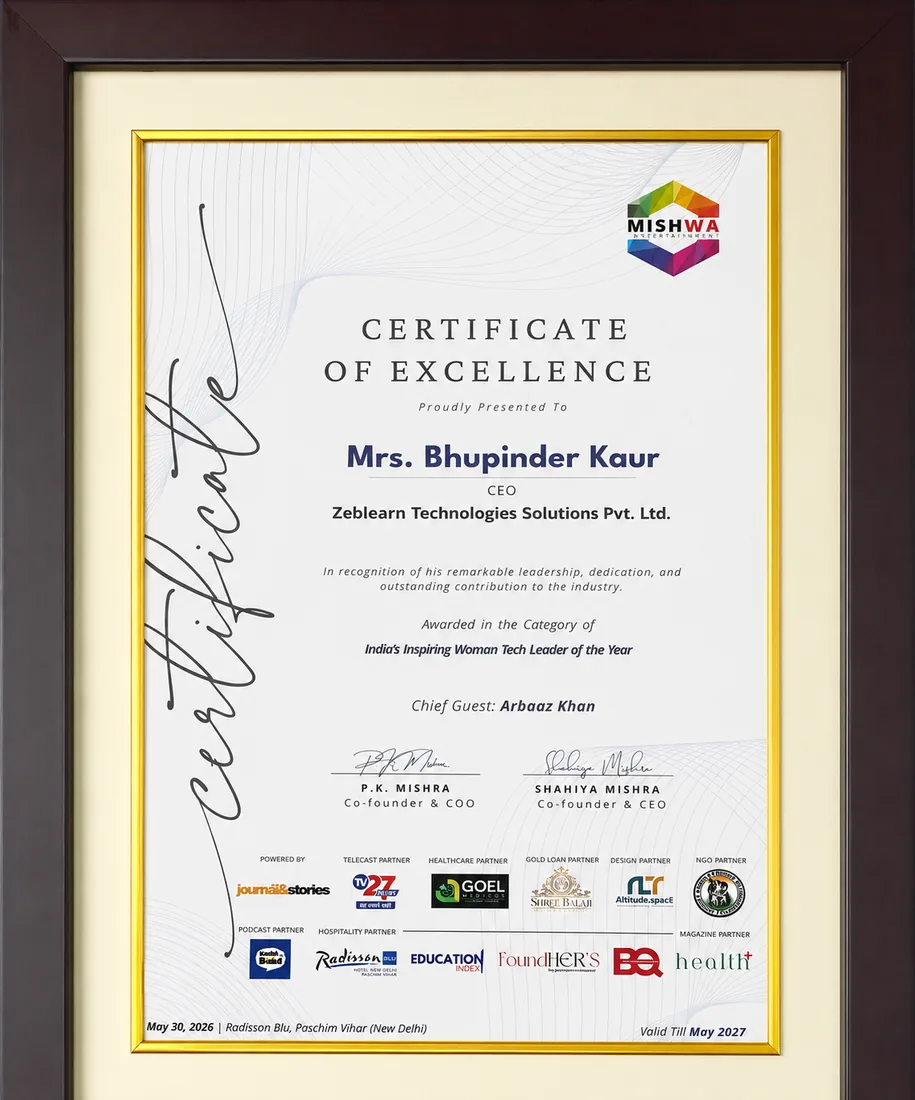
    Inspiring Woman Tech Leader of the Year

    Global SAP Training Spotlight Award

    Brandman India · 2026

    Certificate
    After You Complete

    Resources You Keep After the Course

    Keep your class recordings, project code, a procedure cheat sheet and a set of interview questions.

    Evaluation & Practice Sessions

    Participate in expert-led mock interviews and skill evaluation sessions after program completion.

    Learning Simulation (LMS)

    Lifetime access to LMS with recorded sessions, hands-on practice, and updated learning resources.

    Career & Placement Assistance

    Resume building, profile optimization, interview preparation, and placement guidance from industry experts.

    Live Sessions

    60-Minute Free Webinar with Certificate

    Join our live sessions and earn a free certificate. Limited seats available!

    Upcoming Live Classes

    Sessions from

    Live & Open
    DateTime ISTCourse / ModuleRegister
    Loading upcoming sessions...
    Student Portal

    Everything your batch needs, in one place

    Live classes, recordings, daily practice, case studies and progress tracking — all inside your portal, on any device.

    Live classes, one-click join Next class, time and link with a live countdown
    Every session recorded Revisit any class you missed, any time
    Daily T-Codes A fresh set of SAP transaction codes every day
    Daily interview questions New questions daily, answers hidden until you try
    Daily SAP updates Release changes and certification news as it happens
    Real business case studies Scenarios you configure yourself, step by step
    Hands-on live projects End-to-end work you can talk about in interviews
    Complete resource library Videos, notes, PDFs, ebooks and question banks
    Progress & attendance Track topics, sessions and your attendance record
    Doubts answered by trainers Ask against a class, get a reply on the same thread
    Global certification support Exam codes, mock tests and booking guidance
    Alumni network Referrals and interview intel from placed students
    Enroll Today

    SAS Training Batches and Timings

    StatusDateTypeScheduleTime
    SOLD OUT 21 Nov 2026 Weekend SAT - SUN (08 Weeks) 18:00 - 20:00
    FILLING FAST 26 Nov 2026 Weekday MON - FRI (08 Weeks) 08:00 - 10:00
    AVAILABLE 1 Dec 2026 Weekend SAT - SUN (08 Weeks) 10:00 - 12:00
    Limited Time Offer

    ₹120,000

    ₹75,000

    You save ₹45,000 Enroll Now, Pay Later

    EMI options available · No-cost study now, pay later

    FAQ

    SAS Course FAQs

    Answers on SAS, coding, the Base exam, fees, duration and jobs.

    SAS Training is widely used in modern industries to automate workflows, analyze data, or manage enterprise processes. ZebLearn provides practical exposure with real-world projects.

    SAS Training includes core tools, frameworks, and architectures that help professionals execute tasks efficiently and at scale.

    SAS Training is applied across IT, analytics, HR, AI, and enterprise systems depending on the domain.

    Beginners should start with fundamentals, followed by hands-on practice, projects, and real-world applications.

    Challenges include complexity, configuration issues, and lack of practical exposure which can be solved with guided training.

    SAS Training differs from alternatives based on scalability, features, and industry demand.

    SAS Training improves productivity by automating tasks, improving accuracy, and enabling faster execution.

    Interview questions focus on practical knowledge, tools, and real-world problem-solving scenarios.

    Career opportunities include engineer, analyst, consultant, or specialist roles depending on the field.

    ZebLearn SAS Training training offers hands-on projects, expert mentorship, and real-world scenarios to make learners job-ready.

    It covers reading and cleaning data, merges, PROC SQL, statistics, regression, charts, reports, macros, debugging and a final project.

    Graduates, analysts and staff in pharma, banking and insurance who want data analysis and reporting skills.

    No. The course starts with simple programs. Comfort with Excel and basic statistics helps.

    Yes. Many banks and clinical research firms still run SAS because of its validated, auditable code.

    SAS fits clinical and banking jobs; Python fits machine learning. Many analysts learn SAS first and add Python later.

    It runs for 8 weeks of 2-hour live classes, on weekday mornings or weekends. Every class is recorded.

    The fee is Rs 75,000, with EMI options. The exam fee is separate.

    Yes. Clinical research firms hire many SAS programmers to prepare trial datasets and reports.

    Yes. Independent learners can use the free OnDemand for Academics edition of Studio.

    SAS Certified Specialist: Base Programming Using SAS 9.4, exam A00-231.

    It has 40 to 45 multiple choice and short-answer questions in 135 minutes. The pass score is 725 out of 1,000.

    The exam fee is USD 180 in most countries, with discounts for students.

    Advanced Programming is the usual next step. Confirm the current exam code with the team before booking.

    It needs steady practice. Managing data carries the most marks, so drill cleaning and combining data.

    No. The fee covers training and exam guidance. You pay the exam fee to the vendor.

    No. It shows you finished the course and project. Only the vendor issues its certification after its exam.

    Common roles are SAS programmer, clinical SAS programmer, data analyst, risk analyst and statistical programmer.

    Yes. Zeblearn helps with your resume, runs mock interviews and shares your profile with hiring companies.

    We use cookies to improve your experience and personalize our site. cookie policy