SAP GRC Training for Access Control, Risk Management and Compliance

SAP GRC Training helps learners understand sap governance, risk and compliance (sap grc) supports access risk analysis, segregation of duties, risk management, process controls, audit management, emergency access and mitigation workflows. The 8-week course is structured for learners who want a practical introduction to the relevant SAP environment, its components and the work performed in implementation and support teams.
4.9 out of 5 based on 10135 votes
google

4.8/5

sulekha

4.8/5

urbanpro

4.7/5

justdial

4.9/5

facebook

4.9/5


ISO
NSDC
Ministry of Corporate Affairs India
Skill India

Calculate Your Course Fee


By requesting here, I agree to Zeblearn's Terms & Conditions and Privacy Policy

Our Partners

Zeblearn Certification Partners

Zeblearn provides instructor-led training. Any logo or accreditation displayed on the live page must be checked against a current, verifiable relationship before it is described as an official SAP partnership. Training delivery by an independent institute does not make the institute an SAP certification issuer.

project-management-institute
adobe
autodesk
meta
cisco
microsoft-certified-professional
information-technology-specialist
unity
intuit
apple
esrp
ic3-digital-literacy-certification
project-management-institute
adobe
autodesk
meta
cisco
microsoft-certified-professional
information-technology-specialist
unity
intuit
apple
esrp
ic3-digital-literacy-certification
Our Students Now Work At Top MNCs
8500+ Students Placed
Nishant Kaushik Placed
Nishant Kaushik
SAP MM
manideepak Upskilled
manideepak
Manager
Hari Shankar Jha Career switch
Hari Shankar Jha
Senior System Admin
alok kumar singh Upskilled
alok kumar singh
sap hcm
Jeevak Placed
Jeevak
Consultant
Abhijit S. Getme Upskilled
Abhijit S. Getme
Consultant Engineer
Kartik Singh Placed
Kartik Singh
SAP SD
Hemant Khainar Upskilled
Hemant Khainar
SAP MM Consultant
Neeraj Khanna Placed
Neeraj Khanna
SAP MM
Burna Vinay Kumar Placed
Burna Vinay Kumar
SAP SD Consultant
Shubham Placed
Shubham
SAP ABAP Consultant
Shashikant Career switch
Shashikant
Structure Engineer
Khushbu Career switch
Khushbu
Sap hcm
About the Course

SAP GRC Training: understand the system behind the business process

SAP GRC Training is designed for learners who want to understand how SAP GRC fits into an SAP environment. SAP Governance, Risk and Compliance (SAP GRC) supports access risk analysis, segregation of duties, risk management, process controls, audit management, emergency access and mitigation workflows. The classes should connect terminology with the business reason behind each configuration or integration decision. Rather than memorising screen names, learners should understand what information enters a process, what the SAP component does with it and how a support or implementation team checks the result.

A practical business example

Consider a company with multiple finance users and a shared SAP system. One employee should not create a vendor, change bank details and approve the payment without oversight. SAP GRC can help identify conflicting access, route risk review and document mitigation controls. The business owner remains responsible for approving the control and monitoring exceptions.

What you should learn

AreaDetails
Learning areaUnderstand the purpose and role of Introduction.
System contextIdentify the SAP components, users and business processes involved.
Configuration thinkingExplain the reason for a setting and the impact of changing it.
MonitoringRead process status, logs, errors or access review outcomes relevant to the module.
TroubleshootingFollow a repeatable method: reproduce, isolate, check evidence, correct and retest.
Project communicationRecord assumptions, test results, dependencies and handover notes.

How the syllabus fits together

Start with the introduction and architecture topics. These give you the vocabulary needed to understand later configuration work. Then move into the core components and their relationship with the SAP landscape. Finish with integration, security, monitoring or governance topics, depending on the module. The order matters because a configuration task is easier to understand when you know which component owns the process and which team uses the result.

For this page, the supplied syllabus titles are retained as provided. The module list is reproduced in the source page file and should be checked by the course owner before any correction is made. Some topics refer to older SAP technology names. Keep those names when explaining the historical product, but identify current SAP products separately rather than implying that the older component is the current product.

Who should consider this course?

B.Com and BBA graduates can approach the subject when they are interested in business process controls, user access, reporting or enterprise operations. Their business knowledge can help them understand why a process exists, although they will still need to learn SAP terminology and system navigation. B.Tech, BCA and MCA graduates may find the technical architecture, interfaces, configuration and troubleshooting topics familiar, but should build a clear understanding of the business use case as well.

Freshers should begin with the introduction, basic SAP navigation and the purpose of each component. Working professionals can map the syllabus to the systems they already support. People moving from general IT support should learn how SAP roles, transports, interfaces, logs and business ownership differ from a typical standalone application. Prior SAP experience is useful but should not be assumed as an entry requirement unless the batch advisor confirms it.

Does this SAP module require coding?

Most GRC functional and access-control work is configuration, rules analysis, workflow and control design rather than conventional software coding. Technical implementation can require integration knowledge, connectors and troubleshooting. Learn SAP security and authorisation fundamentals before advanced GRC configuration.

Course details

AreaDetails
Duration8 weeks
Class duration2 hours per session, as shown in the batch schedule
Weekday batchMonday to Friday, 08:00-10:00
Weekend batchesSaturday and Sunday, 10:00-12:00 or 18:00-20:00, subject to live availability
Recorded classesThe course rules state that every class is recorded; confirm access conditions before enrolment.
Fee₹40,000
PaymentEMI options are available.

How to study effectively

Keep a learning log after every class. Write down the component covered, the business problem it addresses, the configuration or process step demonstrated and one issue that could occur in a live project. Revisit that note before the next class. If a term is unfamiliar, use the official SAP product documentation or learning journey to confirm its meaning. Avoid relying only on short video explanations because product versions and interface names can change.

Use a small example to test your understanding. For an integration topic, sketch the source, target, message and monitoring point. For security, record the user requirement, role, authorisation check and approval. For GRC, describe the risk, conflicting access, control owner and mitigation. For mobility, map the user journey, device, identity and data synchronisation. For NetWeaver, draw the platform component and its dependency on the surrounding SAP landscape.

Related learning: SAP Security Training can help you understand an adjacent SAP skill area.

Related learning: SAP IAG and IAS training can help you understand an adjacent SAP skill area.

Related learning: CIA internal audit training can help you understand an adjacent SAP skill area.

Curriculum

SAP GRC Training Course Syllabus Structure

The supplied page lists 16 syllabus modules. The topics cover Introduction, SAP GRC Modules Overview, SAP GRC Access Control, Segregation of Duties (SoD), SAP GRC Risk Management and related areas.

  • Overview of SAP GRC (Governance, Risk, and Compliance)
  • Importance of GRC in today’s business environment
  • Key components of SAP GRC
  • SAP GRC integration with other SAP modules
  • Role of GRC in risk management, compliance, and governance
  • SAP GRC Access Control
  • SAP GRC Process Control
  • SAP GRC Risk Management
  • SAP GRC Audit Management
  • Overview of SAP GRC solutions in S/4HANA
  • Introduction to Access Control
  • Understanding user provisioning and role management
  • Segregation of Duties (SoD) and Risk Analysis
  • Emergency Access Management (EAM)
  • Compliant User Provisioning (CUP)
  • Access Risk Analysis (ARA)
  • Role Design and Maintenance
  • Integration with SAP Identity Management
  • Importance of SoD in risk management
  • Configuring and managing SoD rules
  • Role conflicts and risk analysis
  • Mitigation strategies for SoD risks
  • Reporting and analyzing SoD conflicts
  • Introduction to Risk Management
  • Identifying and assessing organizational risks
  • Risk analysis, risk appetite, and risk tolerance
  • Configuring risk categories and risk matrices
  • Risk monitoring and reporting
  • Integration of risk management with business processes
  • Introduction to Process Control
  • Setting up internal controls and compliance frameworks
  • Monitoring controls in business processes
  • Automation of control testing and documentation
  • Control monitoring reports and dashboards
  • Integration of process control with risk management
  • Introduction to Process Control
  • Setting up internal controls and compliance frameworks
  • Monitoring controls in business processes
  • Automation of control testing and documentation
  • Control monitoring reports and dashboards
  • Integration of process control with risk management
  • Overview of audit management in GRC
  • Audit planning, execution, and reporting
  • Configuring audit types, criteria, and schedules
  • Integration of audit management with other GRC modules
  • Best practices for effective audit management
  • Importance of Emergency Access Management (Firefighter)
  • Configuring Firefighter roles and access
  • Monitoring emergency access usage
  • Reporting on EAM activities and mitigating potential risks
  • Basic configuration settings for GRC Access Control
  • Role creation and mapping in SAP GRC
  • Workflow configurations and approval processes
  • Managing access requests and approvals
  • Customizing GRC functionalities based on business needs
  • Integration of GRC with SAP ERP and SAP S/4HANA
  • SAP GRC integration with HCM, FI, MM, SD, and other modules
  • Integration with SAP BusinessObjects for reporting
  • Real-time risk and compliance data across modules
  • Standard GRC reports for risk analysis and compliance
  • Customizing reports in GRC for specific business needs
  • Designing dashboards for GRC monitoring
  • Generating SoD reports, risk reports, and audit reports
  • Configuring Access Risk Analysis in GRC
  • Risk matrices and rule sets in ARA
  • Running risk analysis and generating reports
  • Mitigating risks identified during ARA
  • Maintaining ARA reports and auditing
  • Defining and implementing mitigation controls
  • Monitoring control effectiveness
  • Automating workflows for access requests and risk approvals
  • Best practices for workflow configuration
  • Best practices for implementing GRC in organizations
  • Managing and maintaining GRC roles and authorizations
  • Case studies of GRC implementations in various industries
  • Lessons learned from successful GRC projects
  • Overview of SAP GRC capabilities in S/4HANA
  • Differences between GRC in ECC vs. S/4HANA
  • Migration of GRC solutions to S/4HANA
  • New features and improvements in GRC on S/4HANA
  • Role of GRC in enhancing security
  • Configuring security settings in GRC
  • Monitoring and reporting on security breaches
  • SAP GRC’s role in protecting sensitive data and meeting regulatory requirements
  • Beyond Learning

    We empower you with skills that land your dream job.

    By requesting here, I agree to Zeblearn's Terms & Conditions and Privacy Policy

    Certification Details

    SAP GRC certification: understand the official route

    SAP GRC certification must be treated separately from training completion. Zeblearn is an independent training provider and its course certificate does not make a learner SAP-certified. SAP issues SAP Certifications after candidates complete the applicable assessment and meet SAP requirements. Before paying for an exam, open the official SAP certification page and confirm that the credential is active and relevant to the product version and role you want.

    Current exam position

    AreaDetails
    Verified positionNo current standalone SAP GRC technical certification exam matching this complete syllabus was verified. SAP provides a Governance, Risk and Compliance learning journey and a Positioning Governance and Risk Compliance knowledge badge.
    What this meansThe badge is not equivalent to a technical consultant certification. For technical access-control work, review the current SAP security and access governance learning paths. Check SAP Learning before booking.
    Exam codeNo directly matching code is confirmed for this course unless explicitly stated above. Do not reuse a retired or unrelated code.
    Duration and cut scoreNot stated for an unverified or non-matching exam. Check the selected certification page on SAP Learning before booking.
    Assessment formatSAP is transitioning its portfolio toward practical, performance-based assessments. The exact format varies by certification and must be checked on the selected exam page.
    Retirement dateNo retirement date is asserted for an unverified exam. Check the official certification listing.

    What to prepare

    Begin with the learning journey linked from the relevant SAP certification page. Compare its learning outcomes with the skills you have practised during training. Note any gap between the course syllabus and the current SAP exam scope. This is particularly important when a course covers an older product generation or a broad platform while the current credential tests a newer cloud service or a specific job role.

    Prepare by explaining concepts without looking at notes, then complete practical tasks in the official learning environment where access is available. Keep a list of tasks you can perform independently and topics where you still need guidance. For system-based assessments, practise navigation, configuration and task completion under time limits. For scenario-based assessments, practise explaining a solution, asking clarifying questions and justifying technical choices.

    Certification cost

    SAP exam access is paid. SAP may package exam attempts within a subscription or sell exam attempts separately, and the available purchase options can change. Do not assume that the exam is free because a training provider offers a free webinar, assessment or course certificate. Check the current SAP Store or SAP Learning purchase page for the price, taxes, number of attempts and validity before payment.

    Is SAP certification required for a job?

    An SAP Certification can help demonstrate that you have met a defined SAP assessment standard, but it does not replace practical experience or guarantee a job. Employers may assess product knowledge, project exposure, troubleshooting, communication and the ability to explain a business requirement. Some roles value certification; others focus more heavily on relevant experience and demonstrated skills.

    Steps to follow

    1. Choose the SAP role or product that matches the work you want to do.
    2. Search the official SAP certification catalogue and open the exact credential page.
    3. Check the exam code, status, format, duration, passing requirement and language on that page.
    4. Review the recommended learning journey and identify gaps against your training.
    5. Set up your SAP Universal ID and confirm the required subscription or exam attempts.
    6. Book or launch the assessment only after checking current technical and payment requirements.
    7. Keep the credential status and renewal requirements visible in your SAP account.


    SAP GRC Training Self Assessment

    Use the self-assessment to check your understanding of the concepts covered in SAP GRC. Review the relevant module again when you cannot explain a process, identify a component or describe the purpose of a configuration step.

    Take Free Practice Test
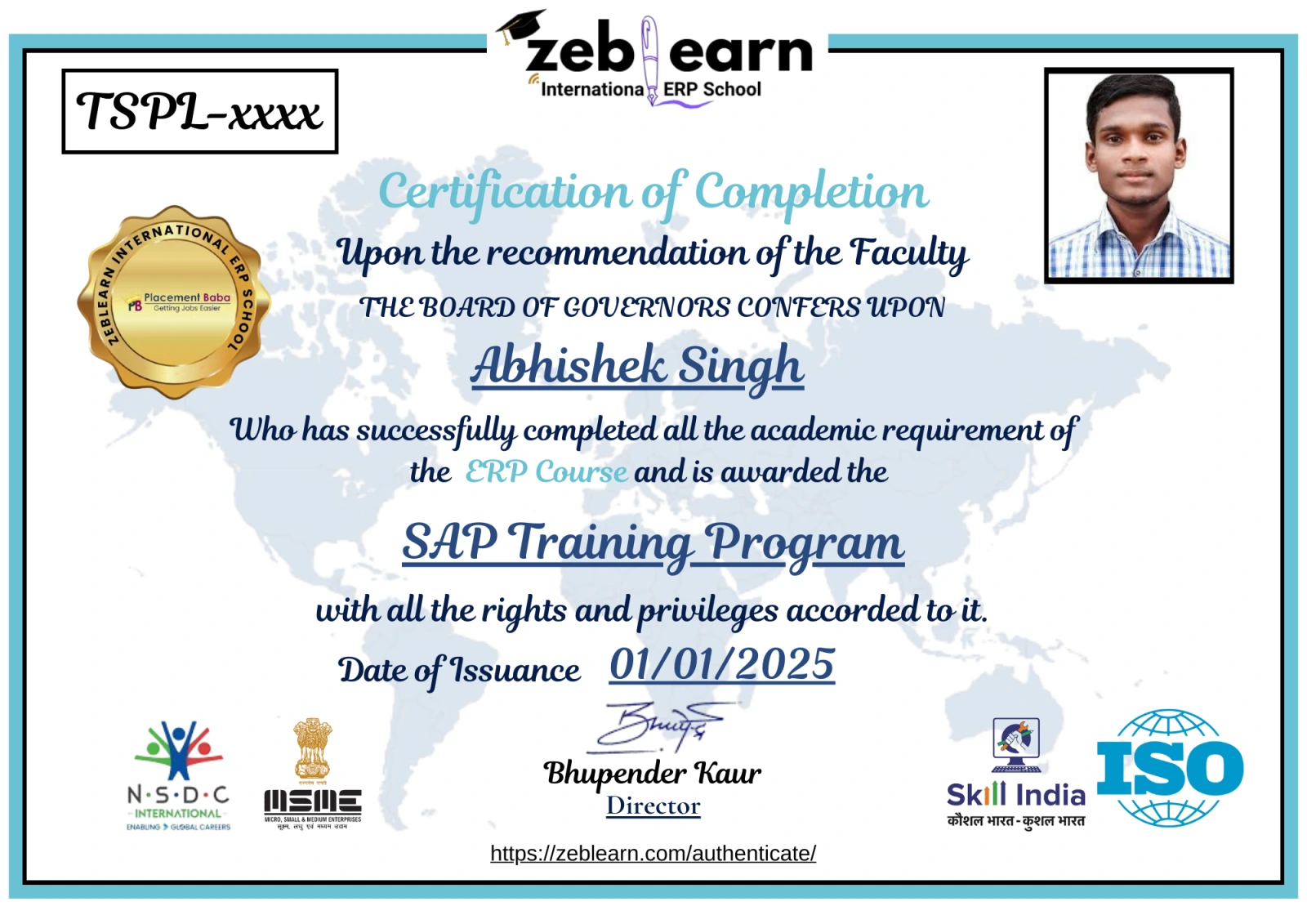
    SAP Governance Risk And Compliance (SAP GRC) Training Certificate
    Career and Placement Details

    Career paths after SAP GRC Training

    Completing SAP GRC Training can help you understand a defined SAP technology area, but a course alone does not qualify every learner for a consultant role. Job readiness depends on your prior experience, the depth of your practice, the SAP versions used by employers and your ability to explain how the technology supports a business process. Use the roles below as possible directions, not as guaranteed placements.

    Related job roles and responsibilities

    AreaDetails
    SAP GRC Access Control ConsultantWorks on access risk analysis, SoD rules, mitigation and emergency access processes.
    SAP GRC Functional ConsultantMaps business control requirements to GRC processes and configuration.
    IT Risk and Compliance AnalystReviews access and control evidence, tracks issues and supports audits.
    SAP Security and Controls AnalystCoordinates role governance, risk reviews and remediation with SAP security teams.

    What employers may expect

    Employers commonly look for clear communication, structured troubleshooting and the ability to document work. Be ready to describe a business requirement, identify the SAP component involved, explain the steps you would take and state how you would verify the result. If you are a fresher, do not claim project ownership or production experience you do not have. Explain the exercises you completed during training and what you learned from them.

    Technical roles may also expect familiarity with system landscapes, access controls, interface dependencies, logs, testing and change management. Functional or governance-oriented roles may expect process understanding, stakeholder coordination, evidence collection and control documentation. The exact balance varies by employer and project.

    Placement assistance

    • Resume guidance focused on the SAP topics and responsibilities you can genuinely explain.
    • Interview preparation around module concepts, practical scenarios and troubleshooting questions.
    • Guidance on presenting previous work experience in a way that is relevant to SAP roles.
    • Support in identifying suitable openings and understanding role requirements, where included in the selected batch.
    • Feedback on communication, project explanations and technical answers during preparation.
    • Advice on building a learning plan for product areas that are outside the supplied syllabus.

    Confirm the exact placement assistance included in your batch before enrolment. The live page should not publish placement rates, employer tie-ups, salary figures or job guarantees unless Zeblearn has current records that support those statements. An interview invitation or resume referral is not the same as a job offer.

    How to improve your job readiness

    Create two or three short case studies based on the course topics. Describe the business situation, the SAP component involved, the steps you would take, the checks you would perform and the result you would expect. Keep each case study honest and label classroom exercises as practice rather than client projects. This gives an interviewer a clear view of your thinking without overstating your experience.

    For freshers, combine SAP learning with fundamentals such as Excel, documentation, business communication and basic IT concepts. For experienced professionals, connect your existing domain knowledge to the SAP process. A finance professional may focus on control and audit requirements; a developer may focus on integration and troubleshooting; an IT administrator may focus on system operations and access management.

    A realistic next step

    Choose a role first, then compare its responsibilities with the course syllabus. If the role requires a current cloud product or a newer SAP certification, add the relevant official learning journey to your plan. Do not assume that a legacy product course automatically covers the current replacement product.

    We prepare you and open doors; the offer depends on your interview.

    Why Zeblearn

    What You Get at Zeblearn

    Zeblearn is a premier institute offering training in SAP, Workday, Data Science, Full-Stack Development, Salesforce, Machine Learning, Software Testing and more — available both online and in classroom, for students, working professionals and entrepreneurs.

    • Expert-Led Training
    • Globally Recognized Certifications
    • Dedicated Job Placement Support
    • Hands-On Learning
    • Flexible Learning Options
    • Affordable Course Fees
    • Career Growth Opportunities
    View Courses
    Awards & Recognition
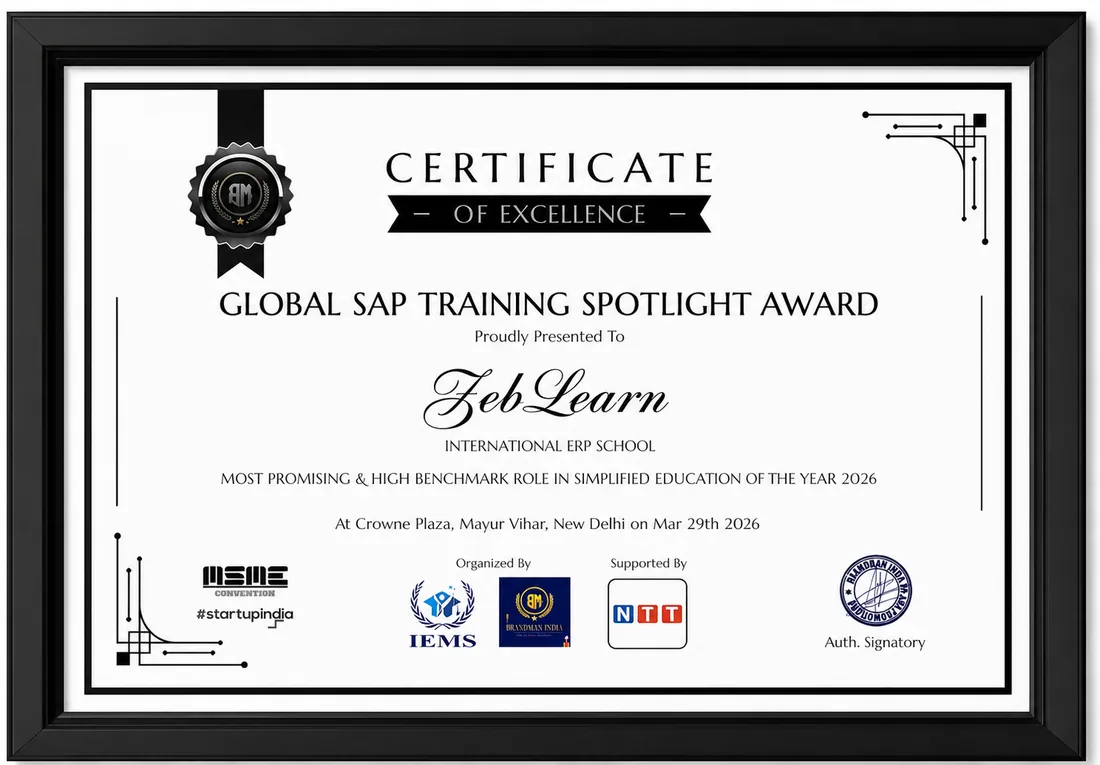
    Global SAP Training Spotlight Award
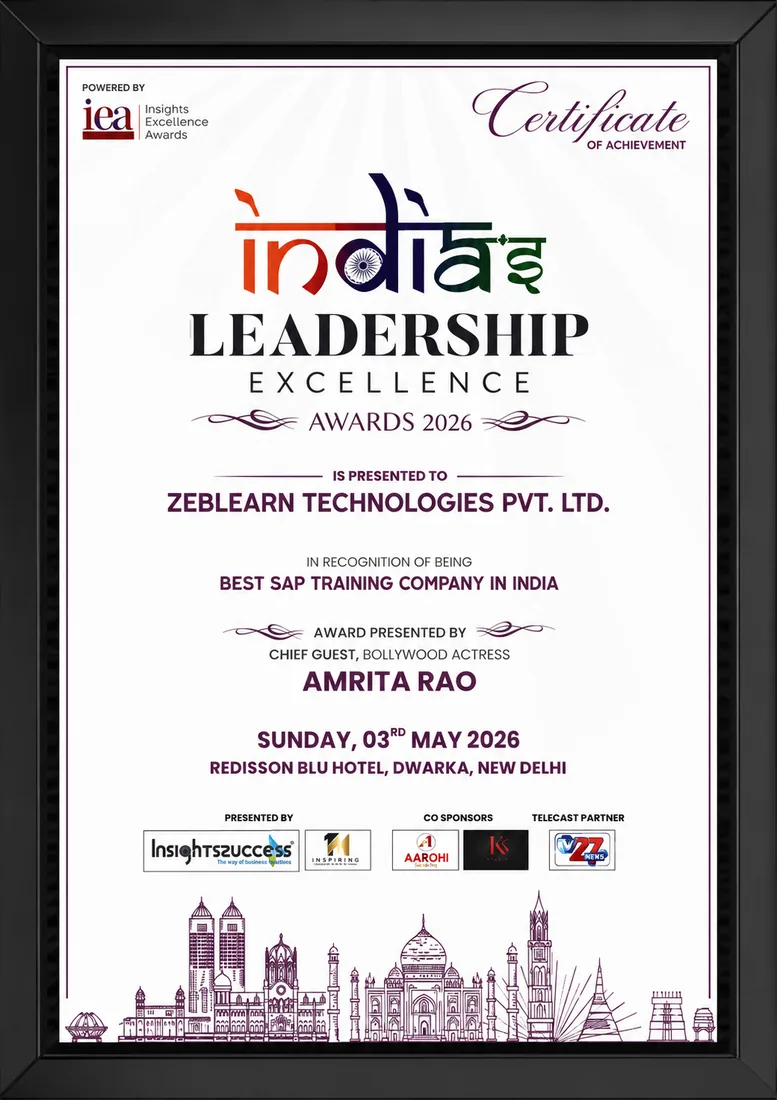
    India's Leadership Excellence Award 2026
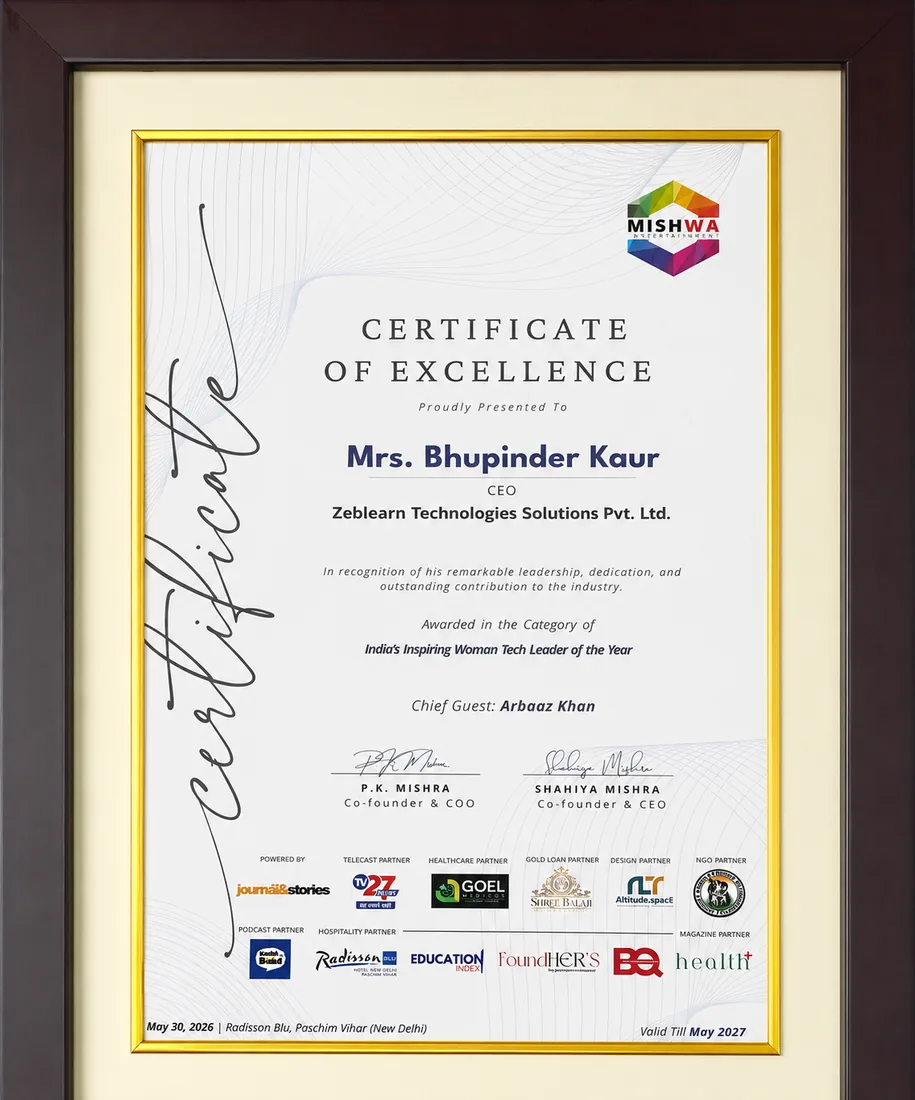
    Inspiring Woman Tech Leader of the Year

    Global SAP Training Spotlight Award

    Brandman India · 2026

    Certificate
    After You Complete

    Get exclusive access to career resources upon completion

    Learners can ask about the career guidance and learning support actually included in their selected batch. Confirm the available support, access period and delivery method with Zeblearn before enrolment.

    Evaluation & Practice Sessions

    Participate in expert-led mock interviews and skill evaluation sessions after program completion.

    Learning Simulation (LMS)

    Lifetime access to LMS with recorded sessions, hands-on practice, and updated learning resources.

    Career & Placement Assistance

    Resume building, profile optimization, interview preparation, and placement guidance from industry experts.

    Live Sessions

    60-Minute Free Webinar with Certificate

    Join our live sessions and earn a free certificate. Limited seats available!

    Upcoming Live Classes

    Sessions from

    Live & Open
    DateTime ISTCourse / ModuleRegister
    Loading upcoming sessions...
    Student Portal

    Everything your batch needs, in one place

    Live classes, recordings, daily practice, case studies and progress tracking — all inside your portal, on any device.

    Live classes, one-click join Next class, time and link with a live countdown
    Every session recorded Revisit any class you missed, any time
    Daily T-Codes A fresh set of SAP transaction codes every day
    Daily interview questions New questions daily, answers hidden until you try
    Daily SAP updates Release changes and certification news as it happens
    Real business case studies Scenarios you configure yourself, step by step
    Hands-on live projects End-to-end work you can talk about in interviews
    Complete resource library Videos, notes, PDFs, ebooks and question banks
    Progress & attendance Track topics, sessions and your attendance record
    Doubts answered by trainers Ask against a class, get a reply on the same thread
    Global certification support Exam codes, mock tests and booking guidance
    Alumni network Referrals and interview intel from placed students
    Enroll Today

    SAP GRC Training Flexible Batches For You

    StatusDateTypeScheduleTime
    SOLD OUT 23 Nov 2026 Weekend SAT - SUN (08 Weeks) 18:00 - 20:00
    FILLING FAST 28 Nov 2026 Weekday MON - FRI (08 Weeks) 08:00 - 10:00
    AVAILABLE 3 Dec 2026 Weekend SAT - SUN (08 Weeks) 10:00 - 12:00
    Limited Time Offer

    ₹120,000

    ₹40,000

    You save ₹80,000 Enroll Now, Pay Later

    EMI options available · No-cost study now, pay later

    FAQ

    Frequently Asked Questions

    Find answers about SAP GRC course topics, entry requirements, class format, certification routes and career options. Verify current SAP product and exam details before making a certification booking.

    SAP GRC helps organisations manage governance, risk and compliance activities connected with SAP systems and business controls. The exact scope depends on the deployed GRC components.

    Access Control supports access risk analysis, access request workflows and controls around user permissions. It is commonly linked with SAP Security processes.

    SoD identifies combinations of access that can create a risk when held by one user. Risk owners review conflicts and decide whether to remove access or apply mitigation.

    Risk Management supports the identification, assessment and treatment of business risks. The organisation defines its risk framework and ownership model.

    Process Control supports the definition and monitoring of controls across business processes. Evidence and testing help control owners assess whether controls operate as intended.

    Audit Management supports audit planning, issue tracking and evidence handling. The specific capabilities depend on the GRC product and version.

    Emergency Access Management provides a controlled process for elevated or temporary access. The process should include approval, logging and review.

    Configuration depends on the product version, business rules, workflows, connectors and organisation control model. Do not treat every implementation as identical.

    GRC integration connects governance workflows and access risk information with SAP systems and identity or provisioning processes. Integration scope varies by architecture.

    Access Risk Analysis identifies potential access conflicts and critical permissions based on the configured ruleset. Results need review by a responsible risk owner.

    Mitigation controls document compensating measures when a risk cannot immediately be removed. Workflow routes the review and approval to the responsible stakeholders.

    Functional GRC work is mainly configuration, workflow and risk analysis rather than conventional coding. Technical implementation may require integration and troubleshooting knowledge.

    Yes. Business graduates may find risk, controls and compliance concepts relevant. They should learn SAP security fundamentals and system terminology.

    Yes. Technical graduates can build on system knowledge, while learning control design, risk ownership and audit evidence.

    Start with SAP GRC overview and Access Control. Then study SoD, risk analysis, mitigation and the relevant process-control or audit areas.

    The supplied page lists an 8-week course with two-hour classes. Confirm the current batch schedule before enrolment.

    The supplied page shows an offer fee of ₹40,000 against a crossed-out price of ₹120,000. Confirm the current offer and payment conditions.

    No. The Zeblearn course certificate is not an SAP Certification. SAP alone issues SAP Certifications after its official assessment.

    We use cookies to improve your experience and personalize our site. cookie policy