SAP ABAP Training with SAP BTP Administration and Integration

This SAP ABAP Training explores enterprise application development alongside SAP Business Technology Platform administration. Learn how ABAP supports SAP business processes, then examine SAP Cloud Platform environments, user and service management, extension development, and SAP integration. The course connects backend programming with cloud-based administration, helping learners understand how to build, extend, and manage SAP applications across on-premise and BTP landscapes.
4.9 out of 5 based on 12958 votes
google

4.8/5

sulekha

4.8/5

urbanpro

4.7/5

justdial

4.9/5

facebook

4.9/5


ISO
NSDC
Ministry of Corporate Affairs India
Skill India

Calculate Your Course Fee


By requesting here, I agree to Zeblearn's Terms & Conditions and Privacy Policy

Our Partners

Zeblearn Certification Partners

SAP ABAP collaborations with leading tech firms expand your network. You will access exclusive APIs and sandbox environments for real‑time integration.

project-management-institute
adobe
autodesk
meta
cisco
microsoft-certified-professional
information-technology-specialist
unity
intuit
apple
esrp
ic3-digital-literacy-certification
project-management-institute
adobe
autodesk
meta
cisco
microsoft-certified-professional
information-technology-specialist
unity
intuit
apple
esrp
ic3-digital-literacy-certification
Our Students Now Work At Top MNCs
8500+ Students Placed
Nishant Kaushik Placed
Nishant Kaushik
SAP MM
manideepak Upskilled
manideepak
Manager
Hari Shankar Jha Career switch
Hari Shankar Jha
Senior System Admin
alok kumar singh Upskilled
alok kumar singh
sap hcm
Jeevak Placed
Jeevak
Consultant
Abhijit S. Getme Upskilled
Abhijit S. Getme
Consultant Engineer
Kartik Singh Placed
Kartik Singh
SAP SD
Hemant Khainar Upskilled
Hemant Khainar
SAP MM Consultant
Neeraj Khanna Placed
Neeraj Khanna
SAP MM
Burna Vinay Kumar Placed
Burna Vinay Kumar
SAP SD Consultant
Shubham Placed
Shubham
SAP ABAP Consultant
Shashikant Career switch
Shashikant
Structure Engineer
Khushbu Career switch
Khushbu
Sap hcm
Nishant Kaushik Placed
Nishant Kaushik
SAP MM
manideepak Upskilled
manideepak
Manager
Hari Shankar Jha Career switch
Hari Shankar Jha
Senior System Admin
alok kumar singh Upskilled
alok kumar singh
sap hcm
Jeevak Placed
Jeevak
Consultant
Abhijit S. Getme Upskilled
Abhijit S. Getme
Consultant Engineer
Kartik Singh Placed
Kartik Singh
SAP SD
Hemant Khainar Upskilled
Hemant Khainar
SAP MM Consultant
Neeraj Khanna Placed
Neeraj Khanna
SAP MM
Burna Vinay Kumar Placed
Burna Vinay Kumar
SAP SD Consultant
Shubham Placed
Shubham
SAP ABAP Consultant
Shashikant Career switch
Shashikant
Structure Engineer
Khushbu Career switch
Khushbu
Sap hcm
Curriculum

SAP ABAP Training, BTP Administration Course, SAP Cloud Platform, SAP Extension Development, SAP Integration Course Syllabus Structure

The SAP ABAP syllabus blends core syntax with advanced OOP concepts. You will complete 45 coding labs covering ALV reports, BAPI enhancements, and CDS views.

  • In this module, the candidate will learn about Advanced Business Application Programming of System Application and Product, which includes understanding SAP Architecture, Features, ABAP Development Tools, ERP and SAP, and R/3 Architecture.
  • SAP Overview
  • SAP Architecture
  • SAP Features
  • ABAP Development tools
  • Enterprise Resource Planning (ERP)
  • SAP and R/3 Architecture
  • ABAP/4 overview
  • In this module, the candidate will learn about ABAP Dictionary, Tables, Domains, Structure, Indexes, Buffering, Views, Type tools, Primary and Foreign Keys, Numeric Characters, String, etc.
  • What is ABAP Dictionary?
  • Tables, domains, and data elements
  • Structure, table types, and objects
  • Indexes and buffering
  • Views, lock objects, search helps, and type pools
  • Primary Key and Foreign Key
  • Table maintenance generator
  • Numeric character, integer, floating-point
  • Time, strings, date, packed decimals
  • In this module, the candidate will learn about ABAP Programming, which includes Using Loops and Branches, Code Inspector, Opening and Updating SQL Statements, Internal Tables, I/O statements and Formatting commands, and Runtime analysis.
  • Using Loops and Branches
  • If, else if, factorial and small programs, code inspector
  • Message classes and selection screens
  • Open and update SQL Statement
  • Insert and select
  • Delete, update and modify
  • Internal tables and field symbols
  • I/O statement and formatting commands
  • Runtime analysis and performance trace
  • In this module, the candidate will learn about Debugging and Modularization Technique, which includes an understanding of System Variables, Table mode, Watch points, Utilization of debugging editor, Modularization Technique, Subroutines, Function Modules, and Groups, and Passing parameters.
  • Introduction on debugging your program
  • System variables
  • Table mode
  • Watch points and breakpoints
  • Utilizing debugging editor
  • What is a modularization technique?
  • Subroutines
  • Includes
  • Function modules and function groups
  • Passing parameters and tables to subroutines
  • In this module, the candidate will learn about Classical Report Events, Interactive Reports, Control Level Commands, Hotspot, and Selection Screens.
  • Classical report events
  • Interactive reports
  • Control level commands
  • Hotspot, Hide, Get cursor techniques
  • Selection screens
  • In this module, the candidate will learn about Application Link Enabling Features, Inbound and Outbound processes, Configuration, Distribution Scenarios, Local System, Developing Ports, and Customer Distribution Model.
  • ALE introduction and its features
  • Inbound and outbound processes
  • ALE configuration
  • ALE distribution scenarios
  • Logical system
  • RFC destination
  • Developing ports
  • Customer distribution model
  • In this module, the candidate will learn about Intermediate Document, which includes understanding, its structure, Message Type, Developing IDOC Type, IDOC Enhancements, and Segment elements.
  • Introduction and features of IDOC
  • Structure, message type and IDOC type
  • Developing IDOC types, message types and process codes
  • IDOC enhancements
  • Segment definition and elements
  • In this module, the candidate will learn about Remote Function Call, which includes Interaction Mechanism using RFC, ABAP Artifacts, Developing Program using Remote enabled functions, Workflow, Creation of Standard tasks and templates.
  • About RFC and Interaction mechanism using RFC
  • TRFC vs ARFC
  • ABAP interfaces
  • Developing program using remote enabled functions
  • RFC destination between two systems
  • Overview of workflow
  • Creation of standard tasks and templates
  • Development of workflow builder and prefix
  • In this module, the candidate will learn about the Business Application Programming Interface and SAP Business objects, Features, and working of BAPI. The student will also learn about BADI and its implementation.
  • Definition of BAPI and SAP business objects
  • Features of BAPI & Developing BAPI
  • Working with BAPI
  • Introduction to BADI
  • Implementation of BADI
  • Introduction to ERP
  • Introduction to SAP & R/3 Architecture
  • Introduction to ABAP/4
  • Logon to SAP Environment
  • Transaction Codes
  • Multitasking Commands
  • Comments
  • Errors
  • ABAP/4 Editor (SE38)
  • Steps for Creating a Program
  • Elements in R/3 Screen
  • Output Statements
  • Operators in ABAP
  • Data, Parameter & Constant Statements
  • Data Types & Classification
  • Data Objects & Classification
  • Text Elements
  • String Operations
  • Control Statements
  • Field strings
  • Data Dictionary Functions
  • Data Dictionary Objects
  • Data Base Tables
  • Structures
  • Views
  • Data Elements
  • Type Groups
  • Domains
  • Search helps
  • Lock objects
  • Primary Key and Foreign Key
  • Table Maintenance Generator
  • Creating a package
  • Difference between local objects & packages
  • Transferring local objects to packages
  • Variants Introduction
  • Creating variants in ABAP Editor & Data Dictionary
  • Message Class Introduction
  • Message types
  • Calling message class in Report & Dialog programs
  • Parameter Statement
  • Select-options Statement
  • Selection-screen Statement
  • Screen table and its fields
  • Dynamic screen modification by using Modif ID key
  • Select
  • Insert
  • Modify
  • Update
  • Delete
  • Types of Internal Tables
  • Declaring Internal Table
  • Populating Internal Table
  • Processing Internal Table
  • Initializing Internal Tables
  • Inner Joins and For All Entries
  • Control Break Statements
  • Debugging Techniques Introduction
  • Breakpoints (Static & Dynamic)
  • Watch points and call stack
  • Dynamically changing internal tables contents in Debugging Editor
  • Options to step through the program in Debugging Editor
  • Modularization Techniques Introduction
  • Includes
  • Subroutines
  • Passing Parameters to Subroutines
  • Passing Tables to Subroutines
  • Function Groups & Function Modules
  • Reports Introduction
  • Classical Reports
  • Interactive Reports
  • Techniques Used For Interactive Reports
  • Hotspot
  • Hide
  • Get Cursor
  • ALV Reports
  • Interactive ALV Reports
  • Saving Report Output to PDF
  • OOPs ALV
  • SAP Query
  • MPP Introduction
  • Relationship between Screen, Flow Logic, and Program
  • Screen Painter
  • Menu Painter
  • Creating Transaction Codes
  • Flow Logic Events
  • Process Before Output (PBO)
  • Process After Input (PAI)
  • Process On Value Request (POV)
  • Process On Help Request (POH)
  • Include Programs in MPP
  • Dynamic Screens
  • Leave Screen
  • Leave to Screen
  • Call Screen
  • Set Screen
  • Processing of List from Transaction and Vice Versa
  • Elements in Screen Layout
  • Table Controls
  • Tab strip Controls
  • Sub screens
  • Object Oriented ABAP Overview
  • Defining a Class
  • Implementing a Class
  • Encapsulation and Implementation Hiding
  • Object Initialization and Cleanup
  • Inheritance
  • Polymorphism
  • Dynamic Method Call Binding
  • Interfaces
  • Interface Inheritance vs Implementation Inheritance
  • Inheritance vs Composition
  • BDC Introduction
  • Recording
  • BDC Methods
  • Call Transaction Method
  • Session Method
  • Handling Table Controls in BDC
  • Different Methods
  • Flat file creation
  • Uploading data
  • File Handling
  • Application Server
  • Presentation Server
  • SAP Scripts Introduction
  • Components of SAP Scripts
  • Layout Set
  • Standard Text
  • Output Program
  • Modifying Standard SAP Script Layouts
  • Including Logos
  • SAP Script Utilities – Upload / Download
  • Introduction to Distributed Environment
  • Introduction to Cross Applications
  • Introduction to RFC
  • Creating RFC Destination between 2 Systems
  • Creating Remote Enabled Function Modules
  • Creating Program Using Remote Enabled Function Modules
  • Smart Forms Introduction
  • Graphics Management
  • Style Maintenance
  • Paragraph Formats
  • Character Formats
  • Writing Print Program and Designing Layouts
  • ALE Basics
  • Overview of Outbound & Inbound Process
  • Configuration Steps
  • Define Logical Systems
  • Assign Client to Logical System
  • RFC Destination
  • Customer Distribution Model
  • Creating Ports
  • EDI Basics
  • Difference Between ALE & EDI
  • Overview of Outbound & Inbound Process
  • Configuration Steps
  • Port Creation
  • Partner Profile Creation
  • What is an IDoc?
  • Types of IDocs
  • Basic IDocs
  • Extension IDocs
  • Creating IDocs
  • Message Types
  • Assigning IDoc Type to Message Type
  • BAPI Overview
  • Creation of BAPI
  • Finding Standard BAPIs
  • Enhancing Standard BAPIs
  • User Exits Overview
  • Finding and Implementing User Exits
  • Customer Exits Overview
  • Finding and Implementing Customer Exits
  • Types of Customer Exits
  • Field Exit
  • Screen Exit
  • Function Exit
  • Menu Exit
  • BADIs Overview
  • Defining a BADI
  • Implementing a BADI
  • Enhancement Points
  • Explicit and Implicit Enhancements
  • Correction & Transport Request (CTS)
  • Transport Organizer
  • Work Bench Request
  • Task Creation
  • Release Objects
  • SAP Memory & ABAP Memory
  • Logical Database
  • Overview of SAP BTP and its role in cloud application development and integration
  • Explanation of key features, benefits, and use cases
  • Understanding the cloud infrastructure components of SAP BTP
  • Overview of compute resources, storage, networking, and security in the cloud
  • Introduction to the SAP BTP Cockpit, the central management interface
  • Exploring administration and monitoring tools for different services
  • Managing user identities and access controls in SAP BTP
  • Configuring authentication and authorization mechanisms
  • Provisioning and managing various services within SAP BTP
  • Configuring service instances, scaling, and resource allocation
  • Managing the lifecycle of applications deployed on SAP BTP
  • Deploying, updating, and monitoring application deployments
  • Integrating applications and services within SAP BTP
  • Configuring APIs, webhooks, and event-driven architectures
  • Ensuring security and compliance in SAP BTP environments
  • Implementing security measures, encryption, and data protection
  • Managing data within SAP BTP services, including databases and data lakes
  • Using analytics tools and services for insights and reporting
  • Monitoring the health and performance of SAP BTP services
  • Configuring logging, metrics, and alerts
  • Implementing high availability and disaster recovery strategies
  • Ensuring business continuity in SAP BTP environments
  • Scaling applications and services for optimal performance
  • Implementing best practices for scalability and performance
  • Managing updates, patches, and changes to SAP BTP services
  • Planning and executing system maintenance tasks
  • Learning best practices for effective SAP BTP administration
  • Tips for optimizing performance, security, and resource management
  • Exploring advanced administration topics based on specific SAP BTP services
  • Addressing industry-specific requirements and challenges
  • Practical exercises to apply the concepts learned
  • Provisioning services, managing applications, configuring security, etc.
  • Practical examples and case studies showcasing the administration of SAP BTP in different scenarios
  • Recap of key concepts and features covered in the course
  • Q&A session to address any remaining questions
  • Beyond Learning

    We empower you with skills that land your dream job.

    By requesting here, I agree to Zeblearn's Terms & Conditions and Privacy Policy

    FREE
    SAP ABAP AND SAP BUSINESS TECHNOLOGY PLATFORM ADMINISTRATION (SAP ABAP/BTP) TRAINING
    SELF ASSESSMENT

    Each module ends with a scenario‑based quiz focused on error handling and data migration. Scores above 80% unlock a simulated live‑system challenge.

    Take Free Practice Test
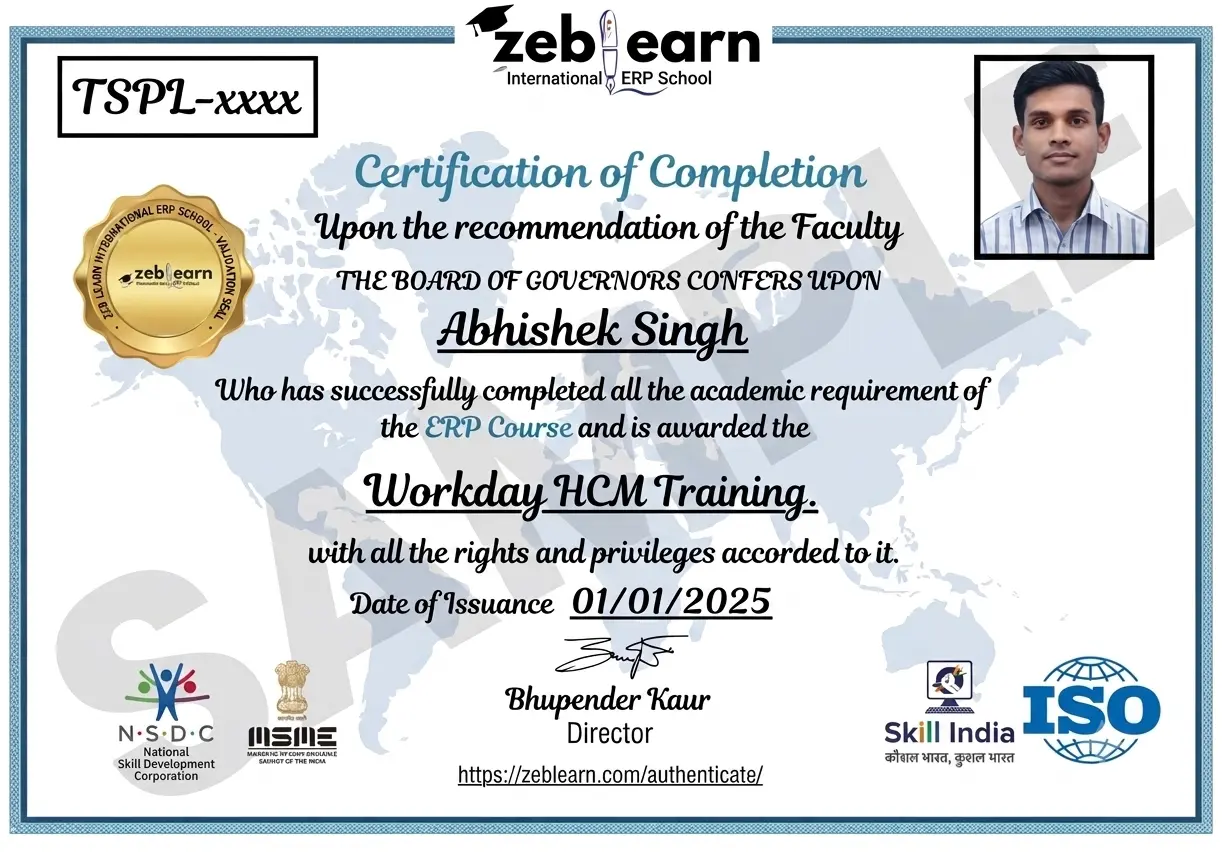
    Workday Certificate
    CAP Certified Learners

    Hear From Our Certified Learners

    Watch how CAP helped students crack exams and land global jobs.

    Video Stories

    Feedback from Our Students

    Watch how Zeblearn's programs helped students achieve their professional goals.

    Why Zeblearn

    What You Get at Zeblearn

    Zeblearn is a premier institute offering training in SAP, Workday, Data Science, Full-Stack Development, Salesforce, Machine Learning, Software Testing and more — available both online and in classroom, for students, working professionals and entrepreneurs.

    • Expert-Led Training
    • Globally Recognized Certifications
    • 100% Job Placement Support
    • Hands-On Learning
    • Flexible Learning Options
    • Affordable Course Fees
    • Career Growth Opportunities
    View Courses
    Awards & Recognition
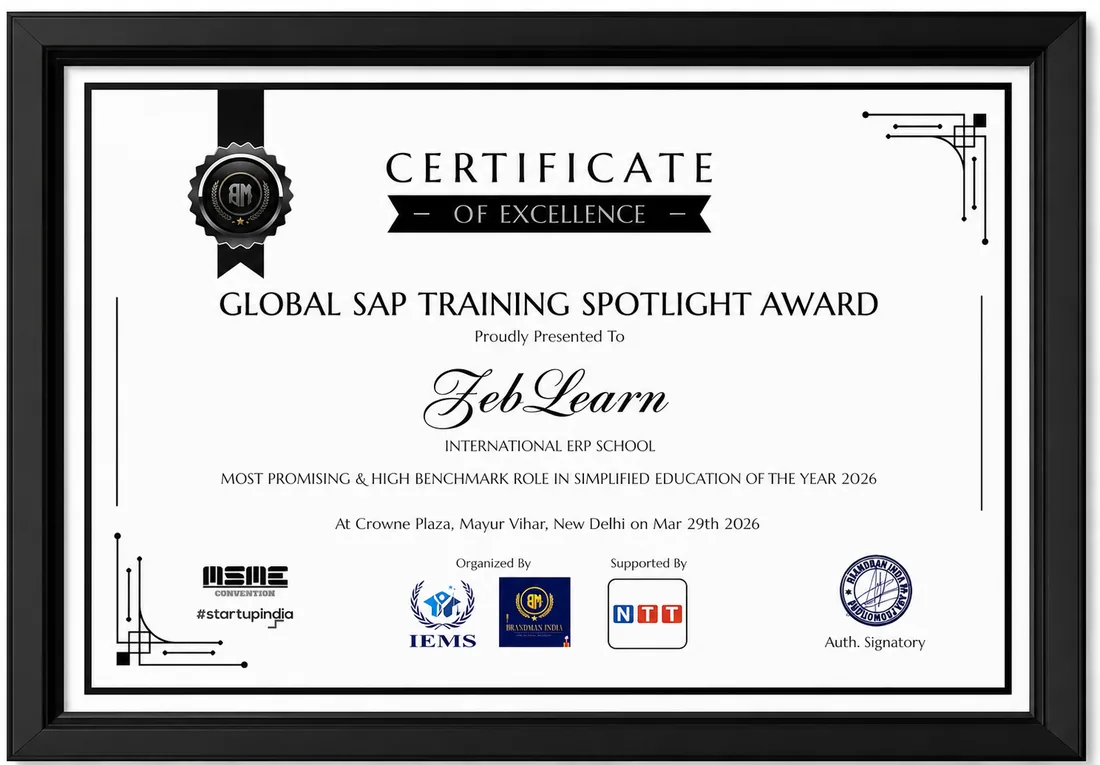
    Global SAP Training Spotlight Award
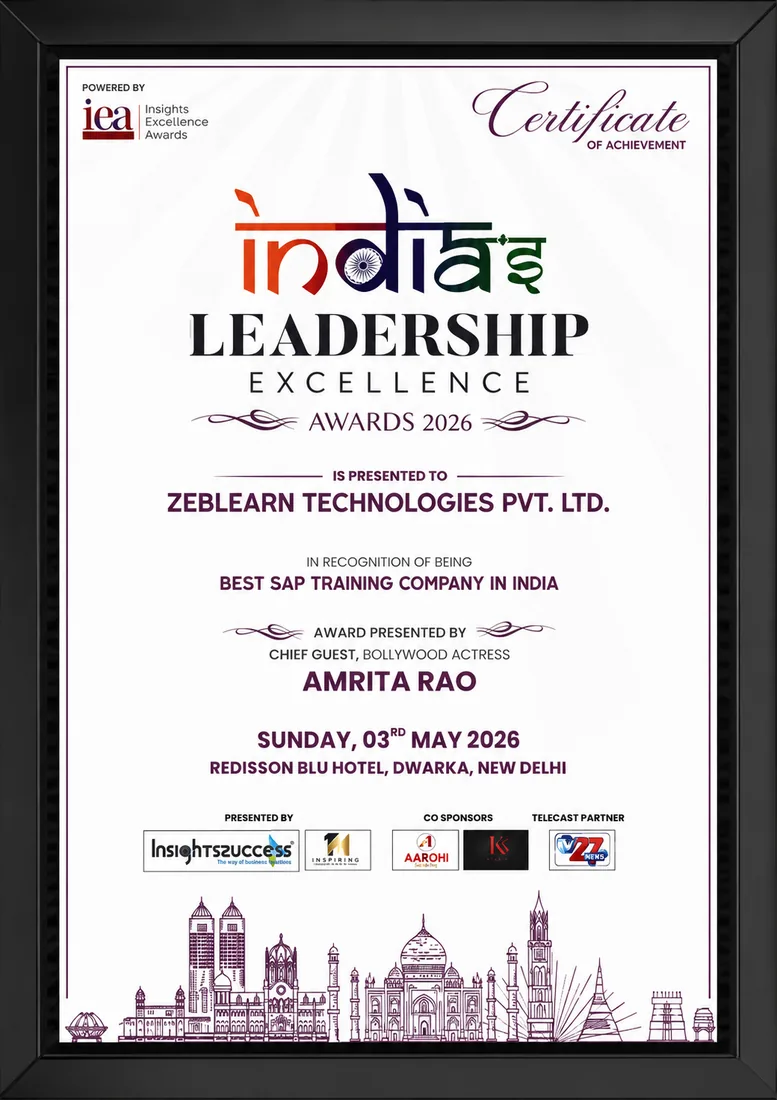
    India's Leadership Excellence Award 2026
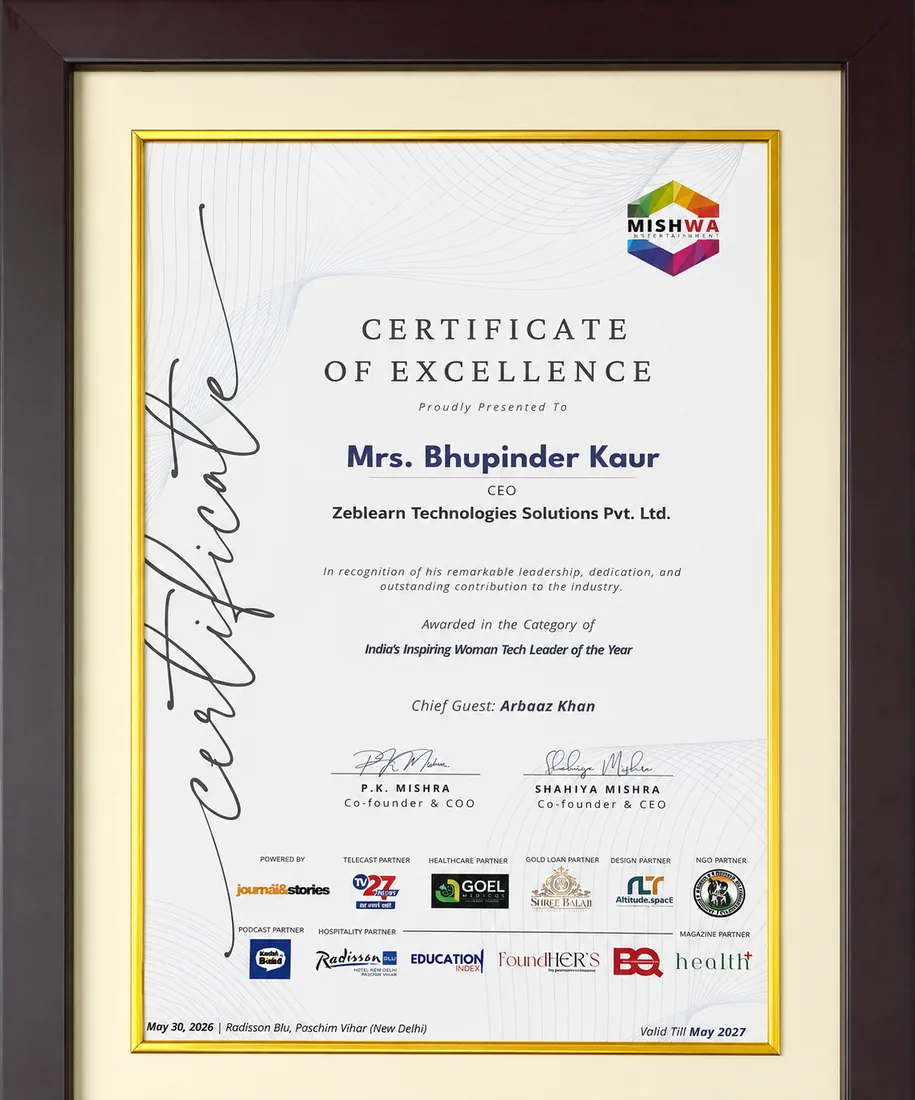
    Inspiring Woman Tech Leader of the Year

    Global SAP Training Spotlight Award

    Brandman India · 2026

    Certificate
    After You Complete

    Get exclusive access to career resources upon completion

    Enrollments include a private BTP tenant for continuous experimentation. The environment supports automated testing pipelines and version control integration.

    Evaluation & Practice Sessions

    Participate in expert-led mock interviews and skill evaluation sessions after program completion.

    Learning Simulation (LMS)

    Lifetime access to LMS with recorded sessions, hands-on practice, and updated learning resources.

    Career & Placement Assistance

    Resume building, profile optimization, interview preparation, and placement guidance from industry experts.

    Live Sessions

    60-Minute Free Webinar with Certificate

    Join our live sessions and earn a free certificate. Limited seats available!

    Upcoming Live Classes

    Sessions from

    Live & Open
    DateTime ISTCourse / ModuleRegister
    Loading upcoming sessions...
    Enroll Today

    SAP ABAP Training with SAP BTP Administration and Integration — Flexible Batches For You

    StatusDateTypeScheduleTime
    SOLD OUT 30 Aug 2026 Weekend SAT - SUN (08 Weeks) 18:00 - 20:00
    FILLING FAST 4 Sep 2026 Weekday MON - FRI (08 Weeks) 08:00 - 10:00
    AVAILABLE 9 Sep 2026 Weekend SAT - SUN (08 Weeks) 10:00 - 12:00
    Limited Time Offer

    ₹120,000

    75,000

    You save ₹45,000 Enroll Now, Pay Later

    EMI options available · No-cost study now, pay later

    FAQ

    Frequently Asked Questions

    Q: What core programming concepts does SAP ABAP Training cover? A: SAP ABAP Training teaches object‑oriented syntax, internal tables, and modularization techniques essential for enterprise applications. Q: How does SAP ABAP Training prepare developers for integration with SAP BTP? A: The curriculum links ABAP data models to SAP BTP services, enabling seamless API consumption and extension development. Q: Which certification exam can be attempted after completing SAP ABAP Training? A: Graduates are eligible to sit for the SAP Certified Development Associate – ABAP with SAP NetWeaver exam.

    SAP ABAP BTP training by ZebLearn includes real-time implementation, certification preparation, and practical industry use cases. It covers certification cost, salary trends, and career scope in 2026 with SEO-focused learning content.

    In enterprises, SAP ABAP BTP is used for automation, analytics, financial processes, or HR operations depending on the module. ZebLearn explains real-time project scenarios and workflows.

    SAP ABAP BTP includes advanced configuration, integrations, analytics, and automation features. ZebLearn provides hands-on training with real-world applications.

    SAP ABAP BTP is compared with other SAP modules based on functionality, integration, and business use cases. ZebLearn explains differences with practical examples.

    Skills include configuration knowledge, business understanding, integration, and troubleshooting. ZebLearn builds these through structured learning.

    The lifecycle includes requirement analysis, configuration, testing, deployment, and support. ZebLearn explains each step with real project flow.

    Challenges include integration issues, performance problems, and configuration errors. ZebLearn provides solutions and best practices.

    SAP ABAP BTP is used for automation, optimization, compliance, and analytics across industries. ZebLearn shares real-world use cases.

    Career roles include consultant, analyst, and specialist with strong salary growth. ZebLearn explains job demand and career paths.

    ZebLearn provides a roadmap: fundamentals → advanced → projects → certification → interview preparation.

    We use cookies to improve your experience and personalize our site. cookie policy